
Quick answer: Winter cycling dries and chaps skin faster than almost any other sport, because the speed of the bike turns a cold day into a strong, constant wind. Protect your face and lips with a balm before you ride, use anti-chafe cream where your shorts and saddle rub, keep your core and hands warm with layers and proper winter gloves, and get out of wet kit quickly afterwards. Then wash, dry thoroughly and moisturise hands, feet and face once you’re warm.
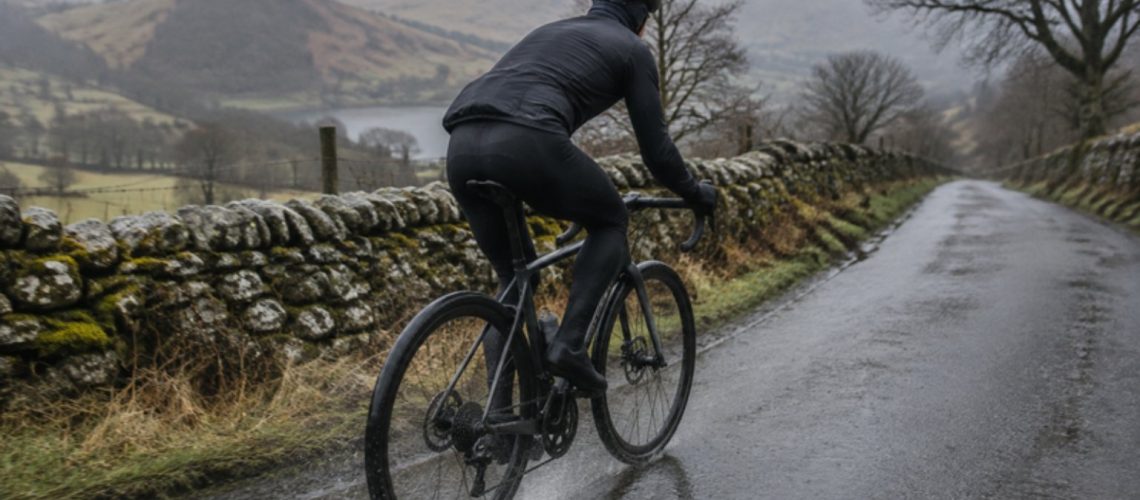
It’s 7°C, drizzling, and you’re forty minutes into a ride along a Welsh lane with spray coming off the front wheel. Your cheeks are stinging, your lips feel tight, your fingers stopped working properly on the last descent, and something is rubbing where your shorts meet the saddle. None of it is dramatic. Together, it’s why plenty of riders hang the bike up in November and don’t see it again until March.
This guide is for road cyclists, gravel riders and commuters who keep riding through the British winter. It covers what cold, wind and wet do to skin on the bike, how to look after your face, lips, hands, feet and contact points, what to do when you get home, and a simple routine you can stick to all season.
Running in the cold is one thing. Cycling adds speed. At 25km/h on a still day you’re riding into the equivalent of a moderate breeze, and on a fast descent it’s a strong one. That constant airflow carries heat and moisture away from any exposed skin, which is why your face can feel raw after a ride even when the forecast didn’t look that bad.
Then there’s the wet. British winter riding usually means rain, road spray or both. Wet skin loses heat much faster than dry skin, and when it dries in cold wind it’s left tight and rough. Add grit and salt from treated roads and the skin on your face and hands gets a light sandblasting on top.
Finally, your skin is starting from a drier place. Weeks of cold air outside and central heating inside leave it with less moisture in reserve (our guide to winter indoor heating and dry skin explains why). The result is that winter riders tend to get the same set of problems: windburn and chapping on the face, split lips, cracked knuckles and fingertips, numb and painful hands, and more chafing than in summer, because damp kit rubs more than dry kit.
Your face takes the full force of the airflow and the spray, and it’s the part of you that’s least covered. The simplest fix is a physical one: a thin buff or neck gaiter you can pull up over your chin and nose on fast or exposed sections, and a cycling cap or thin skullcap under your helmet to cover your forehead and ears.
For the skin that stays exposed, a balm makes a noticeable difference. A thin layer of a beeswax-based balm on your cheeks, nose and chin before you set off sits on the surface and slows down the moisture loss that leaves skin chapped and red. It won’t keep you warm, and it isn’t a substitute for covering up, but it takes the edge off the wind and makes the post-ride sting much less likely. We go into windburn in more detail in our guide to windburn protection in storm season.
Lips have almost no oil glands of their own, so they dry and crack faster than anywhere else. Put lip balm on before you leave and reapply at every café stop. If you’re riding on a bright winter day, especially on snow or high ground, use a lip balm with SPF: UV is lower in winter but not zero, and reflected light adds to it. Our article on chapped lips in cold weather covers this in more depth.
Don’t forget your eyes. Clear or yellow-tinted glasses keep spray and grit out on wet days, and stop you riding along squinting into the wind.
Cold hands are the most common complaint from winter riders, and they’re more than uncomfortable. Numb fingers make braking and gear changes slower and clumsier. Your hands sit right in the airflow, they barely move, and the bars pull heat from your palms.
When your body gets cold, it narrows the blood vessels in your hands and feet to keep warm blood around your core. That’s why the advice from experienced winter riders, including Cycling UK, focuses on keeping your core warm first: a warm torso means more blood reaches your fingers and toes. Practical steps:
Some riders find their fingers go white or blue and numb in the cold, then throb or tingle as they warm up. That can be a sign of Raynaud’s, a common condition that affects blood supply to the fingers and toes. If your symptoms are severe, getting worse or affecting your daily life, the NHS advises seeing a GP. Scleroderma & Raynaud’s UK and Cycling UK both have practical advice for riding with Raynaud’s.
The skin on your hands also suffers on winter rides. Wet gloves, cold wind and repeated washing leave knuckles and fingertips dry and prone to splitting. Our guide to winter hand care on cold, damp days goes into the everyday side of this.
| Problem | What helps on the bike | What helps afterwards |
|---|---|---|
| Stinging, chapped cheeks | Buff over the lower face; thin balm on exposed skin | Lukewarm wash, then moisturise |
| Split lips | Lip balm before you go and at every stop | Lip balm before bed |
| Numb fingers | Warm core, windproof gloves, liner gloves, covered wrists | Warm up slowly; no hot water on frozen hands |
| Cracked knuckles and fingertips | Dry, well-fitting gloves; balm on before the ride | Wash, dry thoroughly, richer balm on hands |
| Chafing | Anti-chafe cream at contact points; clean, well-fitting shorts | Get out of damp kit quickly; wash and dry |
| Cold, damp feet | Overshoes, warm socks, covered vents | Dry feet properly, including between the toes |
Chafing isn’t only a summer problem. In winter, rain and road spray soak your shorts, and wet fabric rubs more than dry fabric. Longer layers like bib tights can add seams in new places, and a heavy winter jacket can rub at the neck and under the arms.
The fundamentals are the same all year:
Anti-chafe cream helps reduce friction. It doesn’t fix a saddle that doesn’t suit you, and it isn’t a treatment for sores. If you have broken, very painful or swollen skin, or anything that looks infected, stop riding on it and speak to a pharmacist or GP. Our article on anti-chafe cream for wet-weather running and walking covers the basics of friction in the wet.
Commuters face a slightly different winter: shorter rides, but twice a day, often in the dark and the rain, and with a day at a desk in between. A few things help:
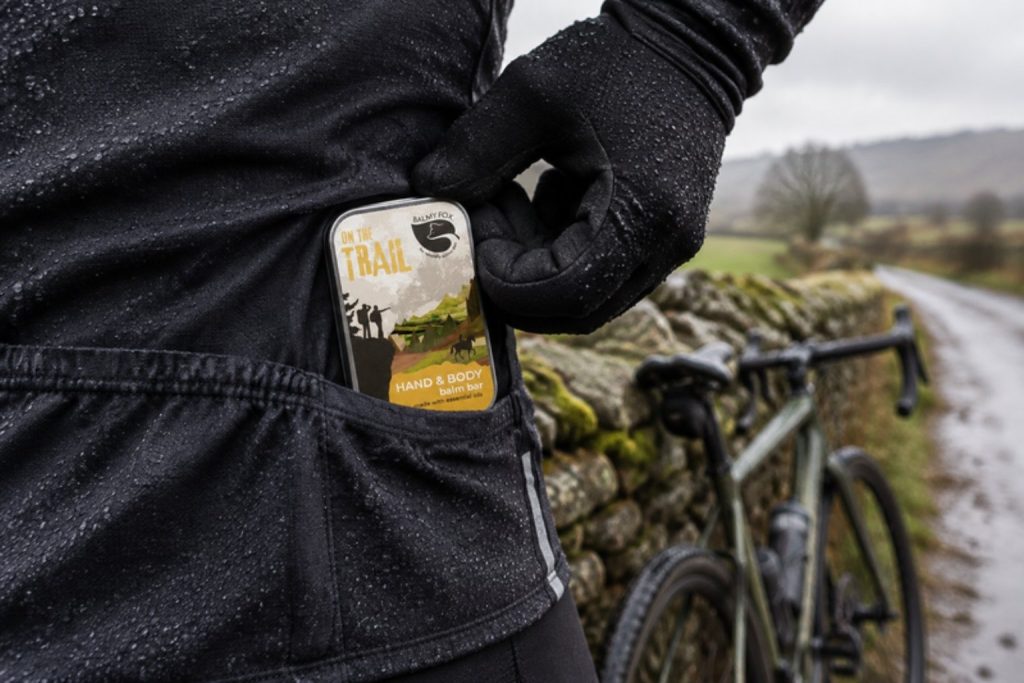
You don’t need much. A small, sealed tin fits in a jersey pocket or saddle bag and won’t leak or crack in the cold.
Cover as much as you can with a buff and a cap under your helmet, then put a thin layer of balm on your cheeks, nose and chin before you ride. The balm slows moisture loss in the wind and makes the sting and redness after a cold ride less likely. Reapply at stops.
The speed of the bike means your face is in a constant cold wind, which strips heat and moisture from the skin. Add rain or spray and the outer layer of skin dries out, leaving it red, tight and sore. Covering up and using a balm before the ride help most.
Keep your core warm first, so your body sends more warm blood to your hands. Wear windproof winter gloves that aren’t too tight, add liner gloves on very cold days, cover the gap at your wrists, and carry a spare dry pair on long or wet rides.
In the cold, your body narrows blood vessels in your fingers and toes. If your fingers go white or blue and numb, then throb as they warm up, it may be Raynaud’s. The NHS advises seeing a GP if symptoms are severe, getting worse or affecting daily life.
Yes. Lips dry and split fast in cold wind and rain. Put lip balm on before you leave and at every stop. On bright days, especially at altitude or on snow, a lip balm with SPF adds sun protection.
Most UK winter days have a low UV index, so day-to-day sun cream isn’t usually needed. On bright days at altitude, on snow or on long rides abroad, UV can be strong enough to burn, so protect your face and lips.
Start with a saddle and shorts that fit you, ride in clean shorts every time, and apply anti-chafe cream to contact points before you get dressed. Get out of wet shorts as soon as you stop. If skin is broken or very sore, rest it and see a pharmacist or GP.
They do a similar job. Both create a slippery barrier that helps reduce friction between skin, fabric and saddle. Some riders apply it to the skin, others to the chamois. Use whichever works for you, on clean, dry skin before the ride.
No. Padded cycling shorts are designed to be worn next to the skin. Underwear adds extra seams and fabric that can rub and trap moisture.
Get out of wet kit straight away, put on dry clothes and have a warm drink. Warm up gradually, then shower in warm rather than very hot water, dry thoroughly and moisturise your face, hands and feet.
As your hands warm up, the narrowed blood vessels open again and blood rushes back, which can sting or throb. Warming them gradually, rather than in hot water, is more comfortable.
Keep your hands dry and covered, dry them properly after washing, and use a balm on your hands before rides and again in the evening. Cracks that are very painful, bleeding or not healing should be checked by a pharmacist or GP.
Yes. A small, sealed aluminium tin fits a jersey pocket or saddle bag and won’t leak or crack in the cold. Keep lip balm somewhere you can reach it without stopping.
Overshoes or winter cycling boots, warm socks that don’t squash your feet, and covered shoe vents. A warm core helps your feet too. Dry your feet thoroughly afterwards, including between the toes.
Our Trail range is made in Mid Wales for long days outside, in small screw-top aluminium tins that fit a jersey pocket or saddle bag.


Trail Anti Chafe Cream (£14.90). A barrier balm of plant oils, shea butter and beeswax that helps reduce friction where shorts, seams and saddle meet. Apply before you get dressed.
Trail Hand Body Balm Bar (£16.90). A solid balm for cheeks, nose, knuckles and anywhere the wind gets at. Smooth a thin layer on before you ride and again on dry patches afterwards.
Trail Lip Balm (£6.80). For lips that take the wind and rain all ride. If you’re riding somewhere bright, the Trail Sun Protection Lip Balm SPF 25 (£8.95) adds sun protection.
Trail Hand and Foot Repair Balm (£16.10). Our thicker balm for hands and feet that come home dry and rough after a cold, wet ride. Best used in the evening, once you’re warm.
Buying for a rider? Our Trail kits bundle these together.
Winter riding is quieter roads, crisp mornings and the smug feeling of arriving at spring already fit. Look after your skin and it stays a pleasure: cover up, balm on before you go, get out of wet kit quickly and moisturise when you’re home. Browse the Trail range and pack a tin for your next cold ride.