

Quick answer: Outdoor workers’ hands take cold, wet, friction, soil, animals, tools and repeated washing every day, so dry, cracked skin is common through winter. Follow the HSE’s simple approach: avoid contact with wet work and irritants where you can, protect your skin with suitable gloves, thorough drying and moisturiser, and check your hands regularly for early signs of dryness, redness or itching. Wash off wet cement straight away, and see a GP or pharmacist about skin that’s sore, weeping or not improving.
It’s half past six on a February morning. You’ve been out to the sheep, the water trough’s frozen again, and your hands have been wet since you started. By lunchtime the knuckles are split, there’s a crack down the side of one thumb that catches on everything, and the back of your hands looks like sandpaper. You’ll do the same tomorrow, and the day after.
That’s winter for farmers, builders, gardeners, groundworkers, tree surgeons, landscapers, posties and anyone else who works outside. We’re a small business in Mid Wales, surrounded by people who do this work, and it’s the same story every year. This guide covers why winter is so hard on working hands, what the Health and Safety Executive (HSE) recommends, practical routines for different jobs, and how to look after your face, lips and feet as well as your hands.
Your skin’s outer layer works as a barrier. It holds water in and keeps irritants out. Winter outdoor work attacks that barrier from several directions at once.
Once the barrier is damaged, skin cracks more easily, and cracks let irritants in. That’s why a little dryness in November can turn into painful, split hands by February if nothing changes.
The HSE’s advice for preventing work-related skin problems is built around three steps: avoid, protect and check. It’s written for employers, but it’s useful for anyone who works outdoors, including the self-employed.
Where it’s sensible and practical, avoid direct contact between unprotected hands and wet work or irritating substances. Use tools rather than hands, long-handled equipment, or a less harsh product where there’s a choice.
When you can’t avoid contact, protect your skin. That means suitable gloves for the task, washing off contamination promptly, washing your hands before eating and before putting gloves on, drying them thoroughly with a clean towel, and moisturising to replace the skin’s natural oils.
Check your hands regularly for early signs of trouble: dryness, itching, redness, flaking or cracking. Problems caught early are much easier to manage. If something isn’t settling, see a GP or pharmacist rather than working through it.
| Step | What it means day to day |
|---|---|
| Avoid | Use tools rather than hands where you can; limit time with wet hands; swap harsh products for gentler ones |
| Protect | Right gloves for the job; wash off dirt and chemicals promptly; dry hands thoroughly; moisturise before work, at breaks and at the end of the day |
| Check | Look at your hands every day for dryness, redness, itching or cracks; get anything persistent checked |
Gloves are your first line of protection, but the wrong glove, or the right glove used badly, can make things worse.
Livestock work means water, cold, animals and washing, all day, every day. Wear gloves for feeding, handling and washing down where you can, especially in lambing and calving season when hands are washed constantly. Keep a tin of balm in the tractor or the shed so you can use it at breaks, not only at the end of the day. Dry hands properly after washing at the yard tap, even when it’s freezing. Follow the safety information for any veterinary products, disinfectants or sprays you handle.
Wet cement is the big one. It’s strongly alkaline, and the HSE warns that cement-based products can cause dermatitis and serious burns, especially when wet cement gets trapped against the skin, for example inside a boot or glove or soaked into trousers while kneeling. HSE advice includes wearing suitable waterproof gloves when working with wet cement for long periods, wearing trousers over boots so cement can’t get inside, using knee pads, and washing cement off the skin as soon as possible. If wet cement has been on your skin for a while and it’s red or painful, wash it off thoroughly with plenty of clean water and get medical advice. Don’t wait to see how it looks tomorrow.
On top of that, builders deal with dust, cold steel, timber and tools. Moisturise at breaks and at the end of the day, and keep a pair of dry gloves in the van. Our shorter piece on natural skincare at work has a few more tips for trades.
Soil dries hands out, thorns and brambles nick them, and some plants irritate skin. Wear gloves for weeding, pruning and handling compost, fertilisers or treated timber. Check the safety information on any products you use. Wash soil off at the end of the day with a mild soap, dry thoroughly and moisturise before bed. Tree surgeons and landscapers dealing with ropes and machinery should look after the skin on palms and fingers, where friction builds up thick, cracked patches.
Hands get the most attention, but faces and lips take the weather all day too. A balm on your cheeks and nose before you head out helps against wind and cold, and lip balm stops lips splitting. Hats and buffs help more than any product.
Don’t forget sun protection. The HSE lists farm and construction workers and market gardeners among the outdoor workers at risk from too much sun. UV is low in a British winter, but by March and April it’s back, and it builds up over years. Cover up, use sun cream on exposed skin from spring onwards, and check your skin for changes. The HSE advises getting any new or changing mole, sore or patch of skin checked by a doctor.
Feet spend all day in wellies or work boots, often damp. Change into dry socks at lunchtime if you can, dry your feet thoroughly at night, including between the toes, and moisturise heels and soles to stop them cracking. Our guide to winter hand care on cold, damp days covers more of the everyday side of cold-weather skin.
Dry, rough hands are common in winter and usually respond to the routine above. Speak to a pharmacist or GP if you notice:
If a skin problem is caused or made worse by work, tell your employer or your occupational health service. Employers have duties under health and safety law to manage the risk.
Look for a rich, fragrance-light balm or cream that leaves a protective layer on the skin and doesn’t wash straight off. Use it before work, at breaks and at the end of the day. A balm in a tough, sealed tin is easier to keep in a van, tractor or shed than a squeezy tube.
Cold air, wind, wet work and frequent washing all strip moisture and natural oils from the skin, weakening its outer barrier. Friction from tools and gloves then opens cracks, especially on knuckles and fingertips.
The HSE recommends an “avoid, protect, check” approach: avoid contact with wet work and irritants where practical, protect skin with suitable gloves, washing, drying and moisturising, and check skin regularly for early signs of problems.
Wet work means having your hands wet for long periods or washing them very often, especially with soaps and detergents. The HSE identifies it as a common cause of work-related skin problems such as dermatitis.
Yes. Wet cement is strongly alkaline. The HSE warns that it can cause serious burns if it’s trapped against the skin, for example inside boots or gloves, as well as dermatitis. Wash it off promptly with plenty of water and get medical advice for any burn.
Both. A thin layer before work helps protect the skin and can make dirt easier to wash off. Moisturising at breaks and at the end of the day replaces oils lost through washing and weather.
They can if hands sweat inside waterproof gloves for long periods, or if gloves are damp or dirty inside. Use the right glove for the job, put gloves on with clean, dry hands, take breaks, and consider a cotton liner.
By wearing gloves for wet and dirty jobs where practical, drying hands thoroughly after washing, moisturising at breaks and at night, and keeping a balm somewhere handy in the yard, shed or tractor.
Keep hands dry and covered, dry them properly after washing, and use a rich balm regularly, especially before bed. Split knuckles that bleed, weep or don’t heal should be checked by a pharmacist or GP.
UV is low in a UK winter, so day-to-day sun cream isn’t usually needed between November and February. From spring onwards, outdoor workers should cover up and use sun cream on exposed skin, as UV damage builds up over years.
Change into dry socks when you can, dry your feet thoroughly at night and moisturise heels and soles before bed. Deep or painful cracks should be checked by a pharmacist or GP.
If skin is red, itchy, swollen, scaly or blistered and not improving, if cracks bleed or weep, if a rash keeps coming back with a particular job or product, or after any chemical or cement burn. Tell your employer if work is causing the problem.
A balm is usually richer and stays on the skin longer, which suits hands that face cold, wet and friction. A lighter cream absorbs faster. Many outdoor workers use a cream during the day and a balm at night.
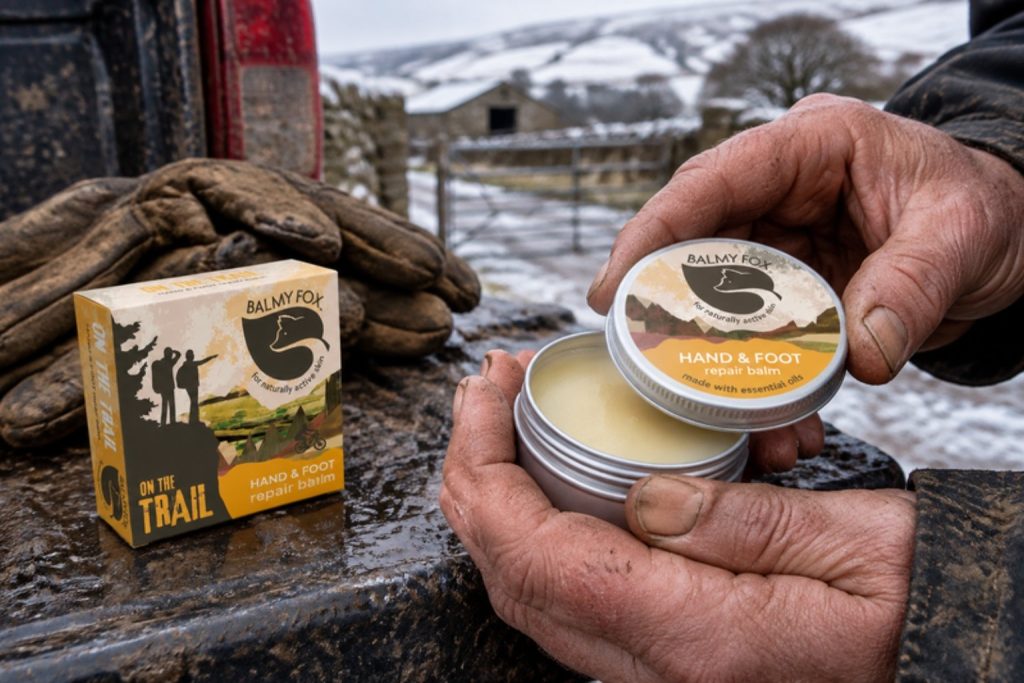
We make our Trail range in Mid Wales, in screw-top aluminium tins that cope with a toolbox, a muddy coat pocket or a cold dashboard.


Trail Hand and Foot Repair Balm (£16.10). Our thickest balm, for hands and feet that come in dry, rough and split at the knuckles. Best before bed, rubbed well into knuckles, fingertips and heels.
Trail Hand and Foot Repair Cream (£14.00). A lighter cream that absorbs faster, for use before work and at breaks when you need to get straight back to it.
Trail Hand Body Balm Bar (£16.90). A solid balm that lives happily in a coat pocket. Swipe it over the backs of your hands, your cheeks or your nose before you head out.
Trail Lip Balm (£6.80). For lips that spend all day in the wind.
Know someone who works outside? Our Trail kits make a useful present.
Working hands don’t get a day off in winter. A few minutes a day makes a real difference: the right gloves, thorough drying, a balm before work and at night, and a daily check. Browse the Trail range and keep a tin wherever you work.