
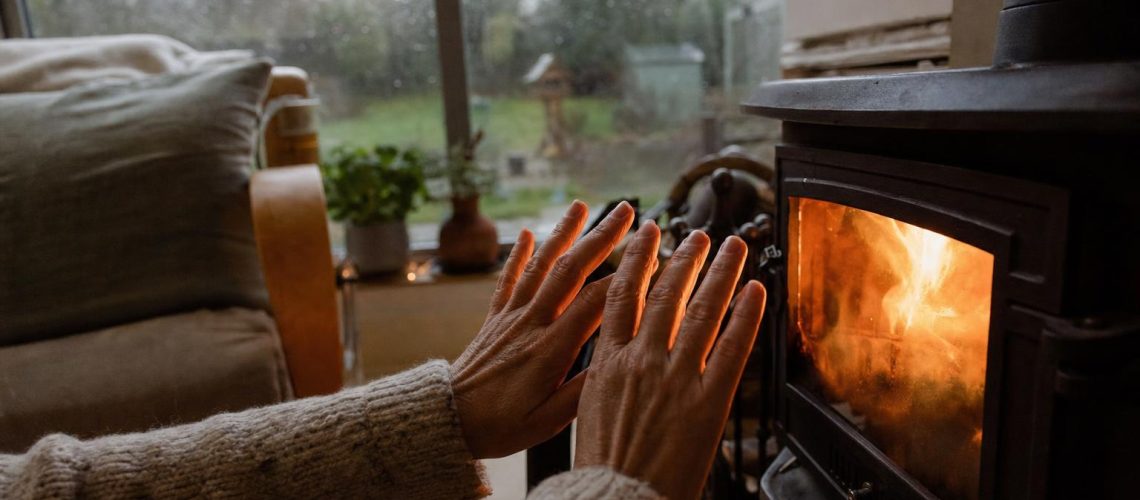
Quick answer: Central heating and wood-burners dry indoor air far more than cold outdoor air does, which is why skin often gets tighter and flakier in January than it does on a windy December walk. The fix is a genuine barrier moisturiser used indoors as a matter of course, not just an outdoor balm reached for on the way out the door, plus a few easy changes to how a heated room is run.
It’s an odd pattern that catches a lot of people out: skin can feel fine on a cold, blustery walk and then get tight and flaky within an hour of sitting in a warm living room. That’s not a coincidence. Heated indoor air is usually far drier, in relative humidity terms, than the cold air outside it came from, and most winter skincare routines are built entirely around the outdoor half of the problem.
This article covers the indoor half — why heated air dries skin out, which rooms and habits make it worse, and how to build a routine that covers both the walk to work and the evening spent next to the radiator.
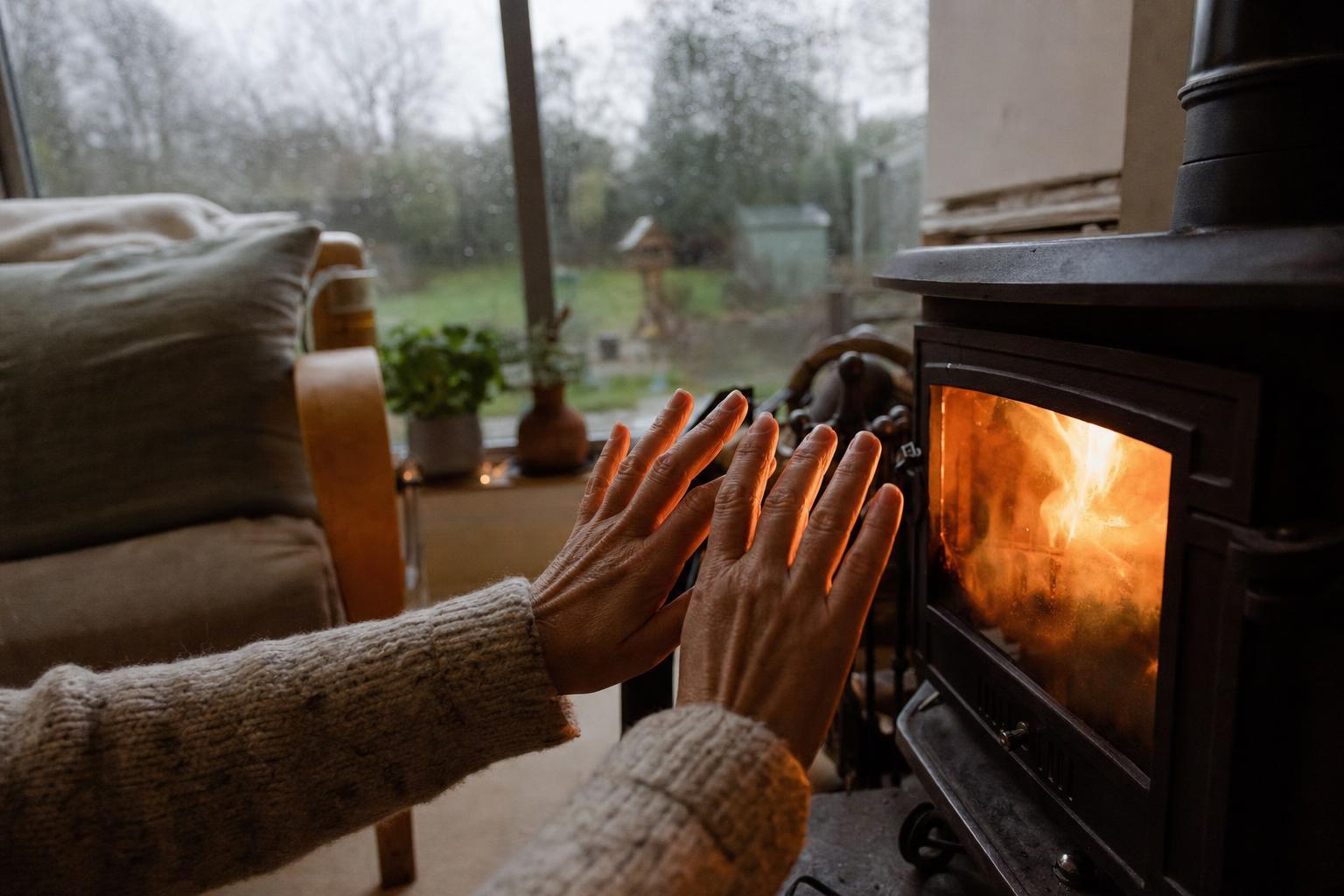
Cold outdoor air can carry very little moisture in absolute terms, but it’s often close to its own saturation point, so its relative humidity can be moderate to high. The moment that air is heated indoors, its capacity to hold moisture rises sharply while the actual amount of water in it stays the same — so its relative humidity drops, often to somewhere between 20 and 30%, well below the 40–60% range most commonly cited as comfortable for skin.
Skin loses water to the air around it in proportion to how dry that air is. A heated room at 20% relative humidity pulls moisture out of skin considerably faster than the cold, damper air outside it did, which is why indoor heating is frequently the bigger factor in winter dryness, not the weaker one.
These dry the air in a room more aggressively than central heating, partly through the heat itself and partly by drawing air through the room to feed the fire. A room with a wood-burner running for an evening is often the driest air in the house.
Hot water strips natural oils from skin faster than warm water does, and a long soak in a heated bathroom compounds the effect. This matters more in winter, when the bathroom is also one of the most heated rooms and skin gets less chance to recover between exposures.
Proximity matters — skin close to a direct heat source dries faster than skin further into the room, which is part of why hands and faces (closest to a fire, most exposed generally) are so often the first place dryness shows.
Eight hours in a heated bedroom is a long, uninterrupted stretch of moisture loss with no reapplication happening, which is why a lot of people wake up with tighter skin than they went to bed with.
| Sign | What’s happening |
|---|---|
| Tightness shortly after coming indoors | Skin adjusting to a sharp drop in surrounding humidity |
| Flaking on hands, knuckles and around the nose | The outer skin layer drying and shedding faster than usual |
| Lips chapping despite staying indoors | Lips have no oil glands, so dry indoor air affects them almost as much as outdoor wind does |
| Skin that feels worse by evening than in the morning | Cumulative moisture loss over a day spent in heated rooms |
| Existing dry patches getting worse specifically at home, not at work | A sign the heating setup at home is drier than other environments you’re in |
A routine built only around leaving the house misses half of the problem. A simple, realistic version covers both sides:
A few practical changes make a genuine difference without needing to rethink the whole heating setup:
| Room | Typical issue | What helps |
|---|---|---|
| Living room (wood-burner or gas fire) | Often the driest air in the house on a cold evening | A humidifier if used often; hand balm kept within reach of the usual seat |
| Bedroom | Long, unbroken overnight exposure | Moisturise before bed; consider turning heating off or down overnight |
| Bathroom | Hot water plus heated air together | Moisturise immediately after washing, while skin is still slightly damp |
| Kitchen | Oven and hob add further heat and dry the air further while cooking | A hand balm by the sink covers the most-washed, most-exposed skin in the house |
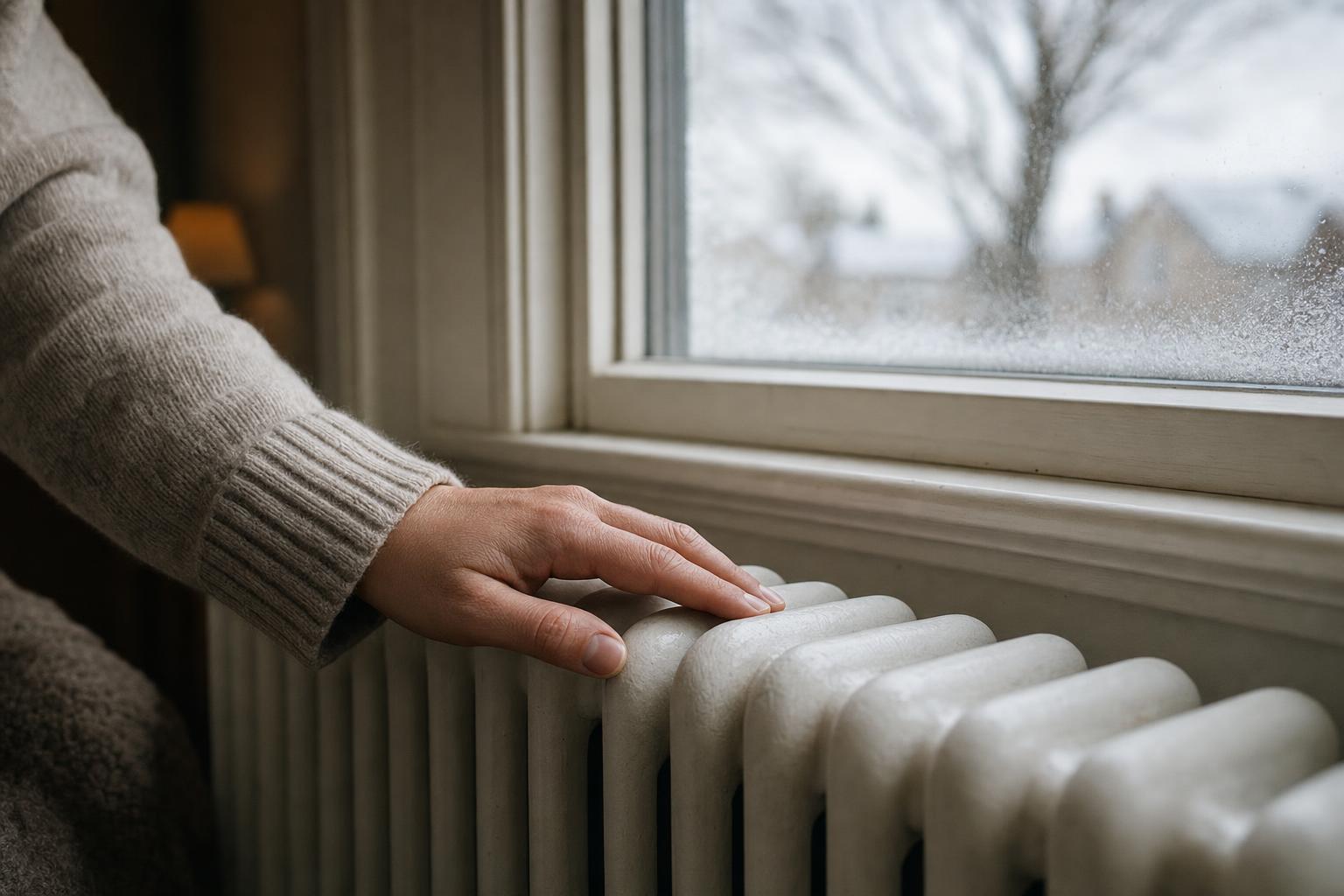
A room heated continuously through a working day is a longer, steadier exposure than most other winter scenarios — longer than a walk outside, and often longer than an evening by the fire. Keeping a hand balm on the desk, applying it at natural breaks rather than waiting for skin to feel uncomfortable, and cracking a window briefly once or twice a day to refresh the air all help, particularly in a small home office where the same air recirculates for hours.
A typical winter weekday moves skin through several very different environments in quick succession: a heated bedroom first thing, cold air on the walk to the car or the station, a heated car or train, a heated office, cold air again at lunchtime, and a heated home in the evening. Each transition asks skin to adjust, and the cumulative effect of several heat-cold swings in one day is often greater than either environment would cause on its own.
This is part of why a single application of balm before leaving the house in the morning rarely lasts the whole day. A hand balm or lip balm kept somewhere reachable through the day — a coat pocket, a desk drawer, a car door pocket — makes it realistic to reapply after each transition rather than only once, at the start.
Once a consistent routine is in place — moisturising after washing, reapplying balm through the day, and addressing the room itself with a humidifier or lower heating where practical — most people notice an improvement within a few days to two weeks. Skin that has been dry for an entire winter with no real routine behind it takes a little longer than skin that’s caught early, which is part of why starting a routine before the first cold snap tends to work better than waiting until skin is already uncomfortable.
Children’s skin dries out faster than adult skin in the same conditions and children are less likely to mention tightness or flaking until it’s already noticeable. A bedroom kept a little cooler overnight, a plain moisturiser used after bathtime while skin is still damp, and a humidifier in a room where a child spends a lot of time can all help, especially for a child who already has naturally dry or sensitive skin.
Straightforward winter dryness usually responds within a couple of weeks to a consistent moisturising routine and a bit less time spent in very dry, overheated rooms. If skin stays uncomfortable, cracked or sore well beyond that despite a genuine routine, or if patches look inflamed rather than simply dry and flaky, that’s worth a pharmacist’s opinion rather than assuming a stronger balm will solve it — indoor heating can certainly make existing skin conditions feel worse, but it isn’t the cause of every winter skin complaint.
Heated indoor air typically has a lower relative humidity than cold outdoor air, even though it feels warmer and more comfortable. Lower relative humidity pulls moisture from skin faster, which is why indoor heating is often the bigger factor in winter dryness.
Somewhere around 40–60% relative humidity is commonly cited as comfortable for skin; UK homes with central heating running often sit well below that, especially in the room where the heating is concentrated.
It addresses one real cause directly, by raising the moisture content of the air itself, which reduces how fast skin loses water to its surroundings. It works alongside a moisturiser rather than replacing the need for one.
Hands are washed more often in winter, exposed to hot water and heated air, and rarely covered the way the rest of the body is by clothing — all of which adds up to more moisture loss than most other parts of the skin experience.
After, and as soon as possible — ideally while skin is still slightly damp, since this helps a barrier product trap some of that moisture rather than working against already-dry skin.
It can, since it’s typically the longest single stretch of dry-air exposure in a day with no reapplication happening. Moisturising before bed, or turning heating down overnight, both help.
Often yes — a wood-burner or open fire tends to dry the air in a room more aggressively than central heating, both through the heat itself and by drawing air through the room to feed the fire.
Yes. Lips have no oil glands, so they’re vulnerable to any dry air, indoor or outdoor, and a day spent entirely in heated rooms can chap lips almost as much as a windy walk would.
It adds a small amount of moisture back into a room’s air as a side effect, which can help marginally, though it isn’t a substitute for a humidifier or a proper moisturising routine if dryness is a genuine problem.
Moisture loss to dry indoor air is cumulative through the day, so skin that felt fine after a shower can feel considerably tighter by evening after several hours in a heated room with no reapplication.
The same principles apply, though children’s skin tends to dry out faster and they’re less likely to mention it until it’s uncomfortable, so a parent checking hands and cheeks and moisturising after bathtime tends to catch problems earlier.
Both contribute, but heated indoor air is very often the larger factor, precisely because it’s a longer, steadier exposure than the shorter walk to work or the school run, and it’s the half of the problem most winter routines overlook.
Each transition between hot and cold air asks skin to adjust, and several such transitions in one day add up to more moisture loss than either environment causes alone — which is why a single morning application of balm rarely lasts a whole winter day.
Most people notice an improvement within a few days to two weeks of consistent moisturising and addressing the room’s humidity, though skin that’s been dry all winter with no routine behind it can take a little longer to recover than skin caught early.
If skin stays cracked, sore or uncomfortable well beyond a couple of weeks of a genuine moisturising routine, or if patches look inflamed rather than simply dry and flaky, that’s worth a pharmacist’s opinion rather than assuming a different balm will solve it.
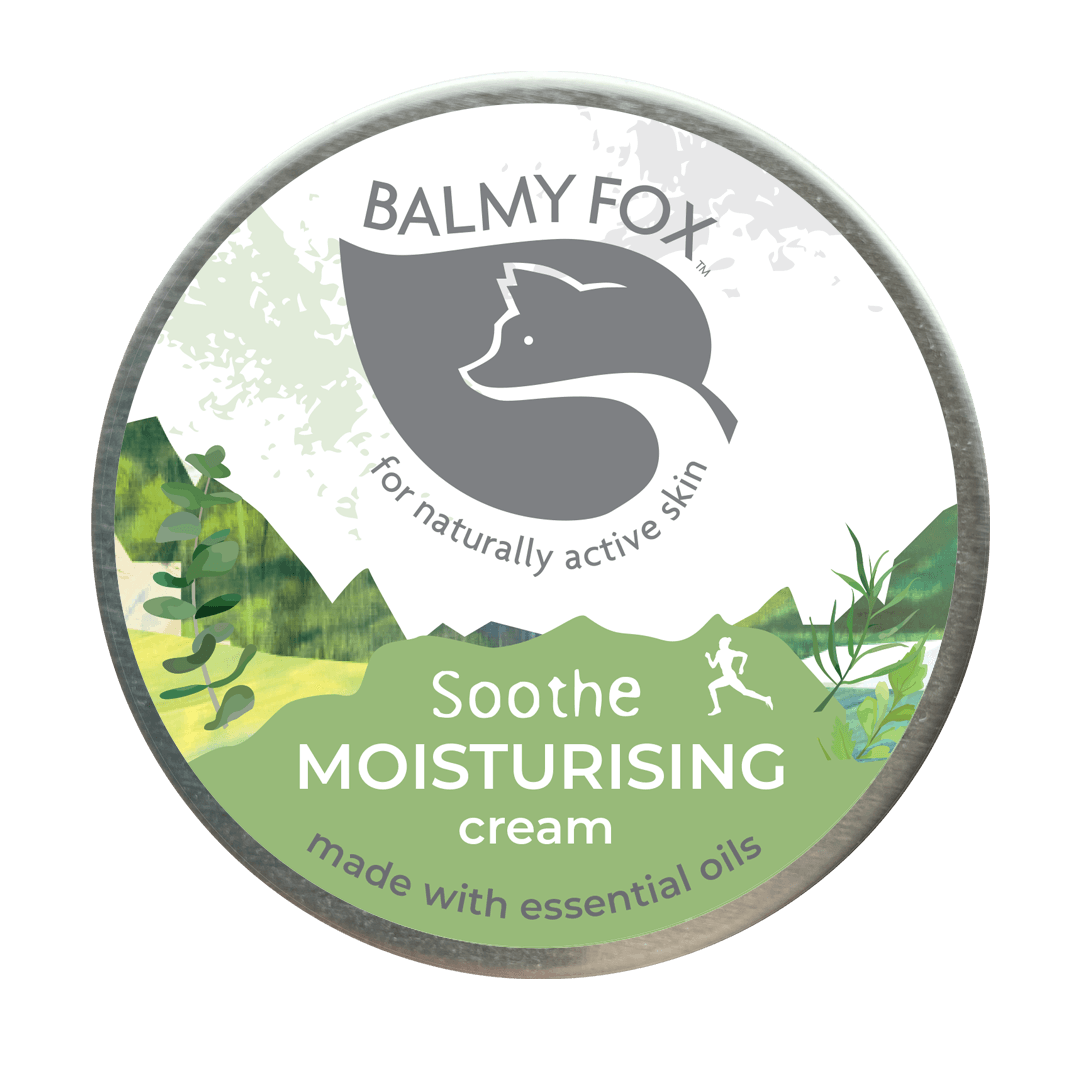

Most winter skincare attention goes on the walk outside — the wind, the cold, the exposed hands and face. The hours spent afterwards in a heated room deserve the same attention, since they’re often doing more of the drying. Balmy Fox’s Moisturising Cream Tin, available across the Trail, Slope, Water and Vegan ranges, is built as a genuine daily barrier moisturiser rather than an occasional treat, and the Hand and Foot Repair Balm covers the hands specifically — the part of the body that washes, heats and dries out the most through a British winter.
Shop the full Moisturising Cream Tin and Hand and Foot Repair Balm range at balmyfox.co.uk, and choose Trail, Slope, Water or Vegan to match how you spend your time.