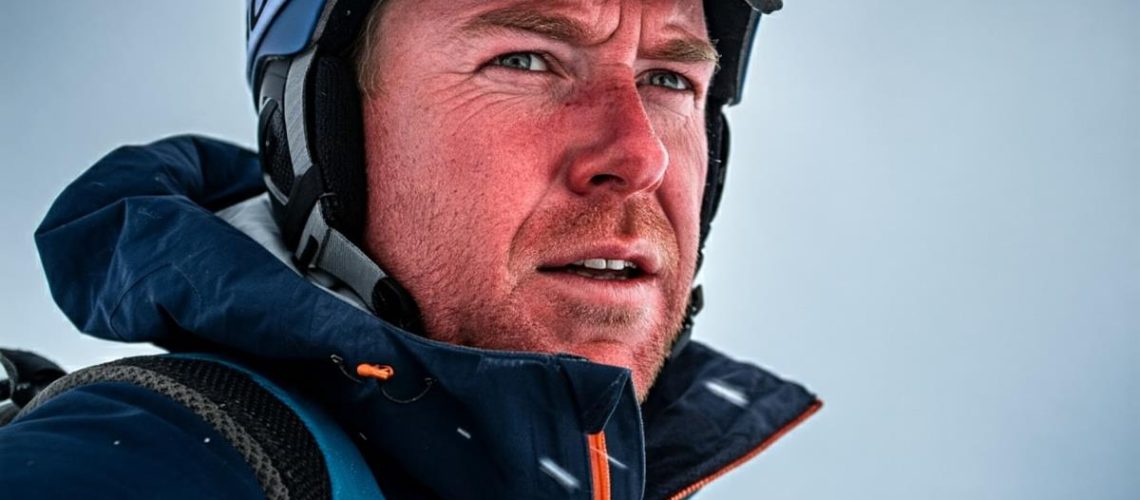
Windburn protection is mostly about two things: covering exposed skin, and applying a richer barrier balm before you go out rather than a light moisturiser afterwards. Wind strips warmth and moisture from the face and hands faster than still cold air does, which is why cheeks, lips, ears and knuckles feel tight, red and sore after a blustery day. Cover up with a hat, buff and gloves, protect what stays exposed, moisturise when you get home, and check official weather warnings before heading out in a storm.
You know the walk. Head down, hood up, forty minutes into a headwind on an exposed stretch of path. It does not feel especially cold while you are moving. Then you get indoors, catch sight of yourself in the hall mirror, and your cheeks are scarlet and your lips have gone tight and papery.
The UK and Ireland storm-naming season starts in early September and runs through the winter, and by mid-October the weather usually has a good deal more energy in it than it did in August. Whether any given autumn brings a run of named storms is not something anyone can promise you in advance — which is exactly why the useful habit is checking the Met Office warnings before you head out, rather than assuming.
This guide is for walkers, runners, cyclists, climbers, dog walkers, outdoor workers and anyone whose week involves being outside when the wind gets up. It covers what wind actually does to skin, how to tell windburn apart from the things that look like it, and a routine that takes under two minutes at either end of a day out.
Still cold air sits against your skin and forms a thin, slightly warmer, slightly more humid layer at the surface. That layer is doing useful work. Wind removes it continuously and replaces it with fresh cold, dry air, over and over, for as long as you are out in it.
The result is that you lose heat and moisture faster than the same temperature would cause in calm conditions. That is all wind chill means: a measure of how cold it feels on exposed skin, not a lower actual air temperature. A thermometer in a gale reads exactly what it reads in still air.
Several things stack up on a stormy day.
| Factor | What it does |
|---|---|
| Cold air | Holds less moisture, so skin loses water to it more readily |
| Wind | Removes the still layer at the skin surface, accelerating heat and moisture loss |
| Low humidity | Cold air after a front passes is often very dry, which increases the effect |
| Rain and spray | Wet skin under wet fabric softens, and softened skin rubs and chaps more easily |
| Repeated exposure | One walk is nothing. Three a day for a fortnight is a different pattern |
| Indoor heating | Coming back into a heated house dries the air around the skin again |
| Friction | Hoods, collars, hat bands, gloves and rucksack straps all rub harder when damp |
The outer layer of your skin behaves like a roof: it holds moisture in and keeps ordinary irritants out. Cold, wind and repeated wetting and drying all make that job harder. When the barrier is doing less well, skin feels tight, rough or itchy and can look red or flaky. It is uncomfortable rather than dangerous, and it settles with sensible care.
Windburn is not a formal medical diagnosis, and plenty of what gets called windburn is a combination of dryness, mild sun exposure and friction. Still, knowing roughly what you are dealing with tells you what to do about it.
| What it is | How it usually presents | What it points to |
|---|---|---|
| Windburn | Redness, tightness, stinging or roughness on exposed skin after a windy day; settles over a day or two | Cover up more, protect before exposure, moisturise afterwards |
| Sunburn | Redness that develops hours after UV exposure, often with heat and later peeling; follows the shape of what was uncovered | Sunscreen and shade. Can happen alongside windburn on a bright, blowy day |
| Ordinary dryness | General tightness and flaking, worse in winter, not tied to one day out | Consistent moisturising and gentler washing |
| Friction or chafing | Redness in a defined band where a strap, collar or cuff sits | Fix the kit, manage moisture, apply an anti-chafe product before activity |
| Eczema or dermatitis | Itchy, recurring, often in the same places; may weep or crust; often long-standing | A medical condition. See a pharmacist or GP rather than relying on cosmetics |
| Allergic reaction | Rash, swelling or itching that appears after contact with something new | Stop using the product and seek advice; urgent help if the face, lips or tongue swell |
| Cold injury | Numbness, or skin that turns waxy, white, grey or hard | Get out of the cold and seek medical help. This is not a skincare problem |
The honest summary: if it appeared after a windy walk, settles in a couple of days and responds to moisturising, it is very likely the ordinary kind of wind-related soreness. If it keeps coming back, keeps spreading, hurts more each day or looks infected, it is not a job for a balm.
This is the part most people get the wrong way round. A light everyday moisturiser is largely water, and it does its work by adding moisture and letting it absorb. That is fine at home. On an exposed path in a 40mph wind, it is not what you want, because the wind removes moisture from the surface faster than a light product can help you hold it.
A richer barrier balm behaves differently. It is oilier and heavier, it sits on the surface for longer, and it slows the rate at which moisture leaves. That is why a barrier balm for walkers, riders and outdoor workers is applied before exposure rather than after it, and why people who spend real time outside end up owning both: a light cream for indoors and evenings, a balm for the exposed bits before they go out.
Two honest caveats. A balm is a cosmetic product that helps skin stay comfortable and hold its moisture — it is not a medical treatment and it does not make you immune to weather. And a heavy product on wet, already irritated or broken skin often feels unpleasant and can trap moisture where you do not want it. If skin is raw or broken, keep it clean and dry, protect it, and leave the heavy stuff off until it has settled.
The short version
Barrier balm on exposed skin before you go. Hat, buff and gloves on. Light moisturiser when you get home, on skin that is still slightly damp. Something richer on hands before bed.
The order matters. Skincare goes on first, clothing goes on second, and clothing is doing the bigger share of the work.
Short outings, repeated. That repetition is the whole issue: three twenty-minute walks a day in wind and rain, with wet gloves, a wet lead and a hand wash after each one, adds up to more exposure than a single long hike. Keep a tin of hand balm by the door and use it every time you come in. Gloves matter more than any product, and a dry spare pair matters more than an expensive pair.
You generate your own wind on top of the weather, and you are warm enough not to notice what your face is taking. Balm on cheeks, nose and lips before you set off, and a buff you can pull up when you turn into the headwind. Damp long-sleeved kit rubs in places a summer vest never touched, so an anti-chafe product on the usual points is worth the thirty seconds.
Speed adds wind whatever the forecast says, and a crosswind on an exposed road adds more. Full-finger gloves earlier in the season than feels necessary, a buff over the lower face for the first cold weeks, and balm on the face and the backs of the hands before you clip in. Check where a damp helmet strap sits under your chin, because that is a friction point most riders never identify.
The hardest combination in Britain: wind with nothing to break it, salt spray that dries on the skin, and often more UV than the temperature suggests because of reflection off the water. Rinse salt off your face when you get back rather than letting it sit, protect before you go, and be realistic about clifftop paths in a named storm — the Met Office and the coastguard both publish warnings for a reason.
Duration plus altitude plus nowhere to hide. Hands come out of gloves for every belay, gate and map check. Lips take wind all day. Carry a small tin somewhere you can reach without taking the pack off, and reapply at stops rather than waiting until something hurts.
Eight hours, five days a week, in whatever the weather does. This is the group whose hands take the most punishment, and the group most likely to be handling tools where a greasy product is a problem. Apply a balm before the shift and again at the end of the day, and use the richer product in the evening when grip no longer matters.
A barrier balm without an SPF does nothing about UV, and the two exposures often happen together. Bright, blustery autumn days are the classic case: cold enough that sunscreen feels absurd, clear enough that UV is still meaningful, especially on high ground or near water where light reflects back at you.
UV levels in the UK fall through autumn and are low for most of the winter, so this is not a year-round daily rule. The sensible habit is checking the UV index alongside the wind, rather than judging by temperature, and using a broad-spectrum sunscreen on bright days, at altitude and on the coast. Mineral sunscreens using non-nano zinc oxide reflect UV at the skin surface, and they tend not to sting when they mix with sweat or spray.
Leave it alone otherwise. Skin that has had a hard day responds better to being left in peace than to a new product, a scrub, or three treatments in a row.
Cosmetic skincare handles ordinary dryness, roughness and wind exposure. It is not the answer to a medical problem. Speak to a pharmacist, GP or other healthcare professional if you have:
Patch-test anything unfamiliar on a small area first, follow the directions on the pack, and stop using anything that irritates your skin.
| When | Do this | Why |
|---|---|---|
| The night before | Check the forecast and any warnings; charge the head torch | Storm days are for shorter routes and better decisions |
| Before you leave | Barrier balm on cheeks, nose, ears, lips and hands | Protection works better applied before exposure |
| Before you leave | Hat over the ears, buff, gloves, windproof outer layer | Fabric does more than any product |
| Bright days only | Broad-spectrum sunscreen on exposed skin | Wind protection does nothing about UV |
| In your pocket | Small tin of balm and a lip balm | If it is in the rucksack you will not use it |
| When you get in | Wet kit off, lukewarm rinse, pat dry, moisturise | Damp skin holds a moisturiser better |
| Evening | Something richer on hands, feet and lips | Overnight is when hands recover |
| Any time | Leave irritated skin alone — no scrubbing, no exfoliating | Already-sore skin does not need a layer taken off it |
Windburn is the everyday name for the red, tight, stinging feeling that follows prolonged exposure to cold wind. It is not a formal medical diagnosis. It happens because moving air strips warmth and moisture from exposed skin faster than still air does, leaving the outer layer dried out and irritated. It usually settles over a day or two with moisturising and no further exposure.
Sunburn is caused by UV radiation and typically appears several hours after exposure, often with heat and later peeling. Windburn appears during or straight after exposure to cold wind and is caused by moisture and heat loss rather than UV. They often occur together on a bright, windy day, which is why cover-up and sunscreen both help.
Cover what you can and protect what you cannot. A hat over the ears and a buff pulled over the lower face do more than any product, and a barrier balm applied to cheeks, nose and lips before you go out helps the skin hold its moisture while you are outside. Moisturise again when you come in.
For exposed skin before you go out, usually yes. Balms are richer and sit on the surface longer, so they slow moisture loss in wind. Light moisturisers absorb quickly and suit indoor use and evenings. Most people who spend time outdoors end up using both, for different moments.
No. Wind chill describes how cold exposed skin feels, not the actual air temperature. A thermometer reads the same in a gale as in still air. What wind does is remove the thin layer of warmer, more humid air at the skin surface, so you lose heat and moisture faster at the same temperature.
A light moisturiser on clean, slightly damp skin is usually fine. A heavy balm on wet, raw or broken skin often feels uncomfortable and is best left until things settle. Keep broken skin clean and protected, avoid scrubbing or exfoliating, and get advice if it is not improving after a few days.
On bright days, at altitude and near water, yes. Wind protection does nothing about UV, and temperature is a poor guide to it. UV levels in the UK are low for much of the winter, so this is not a daily rule from November onwards — check the UV index in the forecast rather than judging by how cold it feels.
Ear rims have thin skin and a limited blood supply, and they are almost always uncovered. That combination makes them one of the first places to sting in cold wind. A hat or headband that covers them is far more effective than anything applied to them, though a balm helps if covering them is not practical.
Wear gloves, use lukewarm rather than hot water, and moisturise after every wash instead of once at bedtime. Cold air, wet leads and handles, and repeated washing all remove oils from the skin surface, and knuckles and cuticles crack first. Keeping a tin by the sink and another by the door makes the biggest practical difference.
That depends entirely on the warning level and the route, and it is a question for the official forecast rather than an article. Check Met Office warnings before you go, avoid clifftops, exposed ridges and woodland in high winds, tell someone your route, and be willing to shorten or postpone. No skincare routine substitutes for that decision.
Yes, and they often say less about it. Children have the same exposed areas as adults and are less likely to keep a hat on or reapply anything. Cover cheeks and ears with a hat and a buff, use a suitable balm before going out and a moisturiser afterwards, and use sunscreen on bright days.
Balmy Fox makes natural outdoor skincare in Mid Wales for people who go out in the weather rather than waiting for it to improve. Everything comes in screw-top aluminium tins rather than plastic, so a tin lives in a coat pocket all winter without popping open, and aluminium recycles indefinitely.
A 60g tin of rich balm for the hands that take the worst of storm season — wet leads, cold gate latches, tools, handlebars, and a wash after every one of them. Keep it by the door and by the sink. Trail Hand and Foot Repair Balm
Lips have no oil glands of their own, which is why they go first in wind. A small tin in the jacket pocket, used at every stop. For bright days and coastal light, the Trail Sun Protection Lip Balm SPF 25 adds mineral sun protection. Everyday version: Trail Lip Balm
The lighter one, for when you get home. Apply to skin that is still slightly damp after a lukewarm rinse. Trail Moisturising Cream Tin
Broad-spectrum mineral sunscreen built on non-nano zinc oxide, which reflects UV at the skin surface rather than absorbing it. Marine-safe, formulated without oxybenzone or octinoxate, and no sting when it mixes with sweat or sea spray. For the bright, blowy days when the wind is the obvious problem and the light is the one you forget. Trail Sun Protection Cream SPF 25
Go out anyway — just go out prepared
Browse the Trail range for barrier balms, lip balms and mineral SPF made for British weather — plant-based, plastic-free, and made in Mid Wales by people who walk in it.