Autumn travel skincare needs one small kit that handles four things: wind, rain, indoor heating and the odd bright day. For a city break, pack a moisturiser, lip balm, hand balm and a cleanser — heated hotels, air-conditioned transport and long days walking are the real conditions. For a coastal trip, swap in a richer barrier balm and a broad-spectrum sunscreen for wind, salt air and reflected light. A 60g tin covers hands, lips and cheeks in one item.
October half-term is the last decent window before winter properly arrives. A few days in a city, a cottage near a beach, a couple of long walks while the weather still allows it. Nobody is going skiing. Most people are not going anywhere hot. And almost everybody packs the same washbag they packed in August.
Autumn travel is awkward precisely because it is mixed. You get a cold, bright morning on a clifftop and a stifling overheated hotel room the same day. An air-conditioned train, then two hours of drizzle. Skin spends the trip adjusting to conditions that keep changing, which is why people come home from a four-day break with chapped lips and dry hands after a summer of no trouble at all.
This guide is for families, couples and anyone travelling in the UK or abroad this half-term. It covers what to pack for a city break, what changes for a coastal trip, how children’s skin differs, and how to get a genuinely small kit through an airport without anything leaking.
Not harder in any dramatic sense. Just more variable, and variability is the thing skin handles least well.
| What you meet | What it does |
|---|---|
| Wind | Strips warmth and moisture from exposed cheeks, lips and hands faster than still cold air |
| Rain and damp | Wet skin under wet fabric softens, then rubs at collars, cuffs and waistbands |
| Cold mornings | Cold air holds less moisture, so skin loses water to it more readily |
| Indoor heating | Hotels, cottages and pubs run warm from October, and heated air is dry air |
| Air-conditioned transport | Trains, coaches and planes all dry the air, often for hours at a time |
| Changing humidity | Repeated swings between damp outdoors and dry indoors give skin nothing to settle into |
| More walking than usual | Sightseeing days and coastal paths mean feet, and often blisters in unfamiliar shoes |
| Frequent hand washing | Travel involves more of it, and each wash removes oils from the skin surface |
The response is not more products. It is a small kit used consistently, and the sense to put a balm on before a windy clifftop walk rather than after it.
Three practical reasons, none of them about minimalism for its own sake.
A small kit gets used. A washbag with eleven items in it means you find the right one on day three. Four items means you use all four, twice a day, without thinking.
A small kit survives the journey. Fewer containers means fewer things to leak, fewer lids to pop and fewer decisions at security. Multi-purpose products are the shortcut here: one balm for lips, hands, cheeks and dry patches replaces three tubes.
And a small kit is honest about the trip. Four days is not long enough for a new routine to do anything. What you want is protection and moisture, applied often, in formats that do not need a bathroom shelf.
City breaks are deceptively demanding. Twenty thousand steps a day, a heated hotel room, an air-conditioned train or plane at each end, pollution, and weather you keep walking in and out of.
Leave behind: a separate face cream, hand cream and body lotion, anything in glass, anything you have not used in the last month, and hotel-miniature clutter.
A coastal trip is a different problem. Wind with nothing to break it, salt spray that dries on the skin and increases rubbing, rain arriving sideways, and often more light than the temperature suggests because the sea reflects it.
Coastal walk skincare comes down to one habit: rinse the salt off when you get in rather than letting it sit and dry on your face and hands. Then moisturise while the skin is still slightly damp.
| City break | Coastal trip | Countryside or outdoor stay | |
|---|---|---|---|
| Main challenge | Heated rooms, air-conditioned transport, pollution, walking | Wind, salt, rain, reflected light | Mud, rain, long walks, cold mornings, wood-burners |
| Priority product | Moisturiser | Barrier balm | Hand and foot balm |
| Sun protection | Bright days only | Bright days and anywhere near water | Bright days and on high ground |
| Most-used item | Lip balm | Lip balm with SPF | Hand balm |
| Easiest thing to forget | Hand care after washing | Rinsing salt off | Feet after a long wet walk |
| Add to the bag | Blister dressings | Spare dry gloves | Dry socks and a second pair of boots |
Nobody wants to think about skincare on a break. The point of a good travel routine is that it takes ninety seconds twice a day and then leaves you alone.
Cleanse or rinse, moisturise, and put a balm on anything that will be exposed if the day involves wind or a coast. Sunscreen if it is bright. Lip balm in the pocket of whatever you are wearing, not the washbag you are leaving in the room.
Reapply lip balm at coffee stops. Reapply sunscreen according to the directions on bright days. If the wind gets up on a clifftop or between buildings, that is the moment for the balm rather than after you get back. And put the hood up — fabric does more than any product.
This is the one that matters most and the one people skip on holiday. Get the day off properly: salt, sunscreen, city grime, sweat. Rinse with lukewarm water, pat dry, and moisturise while the skin is still slightly damp. Then hands, lips and feet, in that order.
Cabin and carriage air is dry, and a full travel day is long. Keep a lip balm and a hand balm within reach rather than in the case, moisturise before you set off, and drink more water than the journey seems to warrant. Sunscreen can travel in the hold — you do not need it on a train.
Children get more exposure and say less about it. They are outside longer, they are lower to the ground and closer to spray and mud, they are less likely to keep a hat on, and they almost never reapply anything without being asked.
Practical points rather than medical ones:
Less than in July, more than people assume. UV levels in the UK fall through autumn and are low for most of the winter, so daily sunscreen is not the rule it is in summer. But a clear October day, on a clifftop or high ground or beside water, still delivers a meaningful dose, and temperature is a poor guide to it.
The habit worth keeping is checking the UV index in the forecast alongside the rain and wind. If you are travelling somewhere further south, treat it as a summer situation regardless of the month.
If you are taking something you have not used before, try it at home at least a week ahead. Apply a small amount to a discreet patch of skin — the inner forearm works — and leave it for 24 to 48 hours before using it properly.
This is worth the small effort for one reason: if something irritates your skin on day two of a four-day break, you have lost half the trip and you are a long way from your bathroom cabinet. It matters more if you have sensitive skin, known allergies, or you are trying something on a child.
The same logic applies to introducing several new products at once. Do it one at a time, at home, so you know which one caused a problem if one does.
If you are flying, the only rule worth memorising is that airport security categorises products by physical form, not by purpose.
Rules vary by country and airport and change over time, so check the current guidance published by your departure airport, your airline and any connecting airports close to your travel date. The rules on the way out do not govern the way home. Nobody can promise you that a particular product will be allowed through, which is why keeping the kit small and the liquids few is the practical answer.
| Item | City | Coast | Countryside |
|---|---|---|---|
| Moisturiser | Essential | Evening use | Essential |
| Barrier balm | Optional | Essential | Essential |
| Lip balm | Essential | Essential, with SPF | Essential |
| Hand balm | Essential | Essential | Essential |
| Sunscreen | Bright days | Essential | Bright days |
| Gentle cleanser | Essential | Useful | Useful |
| Blister dressings and plasters | Essential | Useful | Essential |
| Hat, gloves, spare dry layer | Useful | Essential | Essential |
| Sealed pouch for the kit | Essential | Essential | Essential |
A moisturiser, a lip balm, a hand balm, a gentle cleanser and blister dressings. Heated hotel rooms, air-conditioned transport and a great deal of walking are the real conditions on a city trip, not extreme weather. Add sunscreen for bright days, and keep the lip balm in a coat pocket rather than the washbag.
Add a richer barrier balm and a broad-spectrum sunscreen. Wind on an exposed coast strips moisture from the face faster than still cold air, salt dries on the skin and increases rubbing, and light reflecting off water raises UV exposure even on cold days. Apply the balm before a clifftop walk rather than afterwards.
Usually, but assume it counts towards your liquids allowance. Creams, pastes and semi-solid balms are generally treated as liquids at security, while genuinely solid products such as balm bars are not. Rules differ by airport and change over time, so check the current guidance for every airport on your route before you fly.
On bright days, near water and on high ground, yes. UV levels in the UK fall through autumn and are low for most of the winter, so it is not a daily necessity by late October. Check the UV index in the forecast rather than judging by temperature, and treat any trip further south as a summer situation.
Four items covers most autumn trips: a moisturiser or balm, a lip balm, a hand balm and a cleanser, plus sunscreen if the destination or the forecast warrants it. Multi-purpose products do most of the shrinking — one 60g tin can serve hands, lips, cheeks and dry patches instead of three separate tubes.
A suitable sunscreen, a lip balm, a moisturiser and a hand balm, plus a hat that covers the ears. Children spend longer outdoors, reapply less and complain later, so cover-up matters more than product choice. If a child has a diagnosed skin condition, keep to what your GP or pharmacist has advised rather than swapping products for the trip.
Heated indoor air is dry air, and hotels tend to run warm from October onwards. Add air-conditioned transport at each end of the trip and skin loses moisture steadily throughout, even though you feel comfortable. Moisturising morning and evening, and keeping a lip balm to hand, handles most of it.
Try it at home at least a week beforehand, never for the first time on the trip. Patch-test on a small area such as the inner forearm and leave it 24 to 48 hours before using it properly. If something irritates your skin on day two of a short break, you have lost half the holiday and you are far from your usual products.
Favour screw tops over flip tops, put everything inside one sealed pouch, and pack it in the middle of soft clothing rather than against the side of the case. Solid formats cannot leak at all. Aluminium tins with a screw-top seal hold up well because there is no seam to split and nothing to crack under pressure.
A lip balm, kept in a coat pocket rather than a washbag. It gets used more than anything else, it covers the area that suffers first in wind and dry indoor air, and it takes up no space. A close second is a hand balm, for the amount of hand washing travel involves.
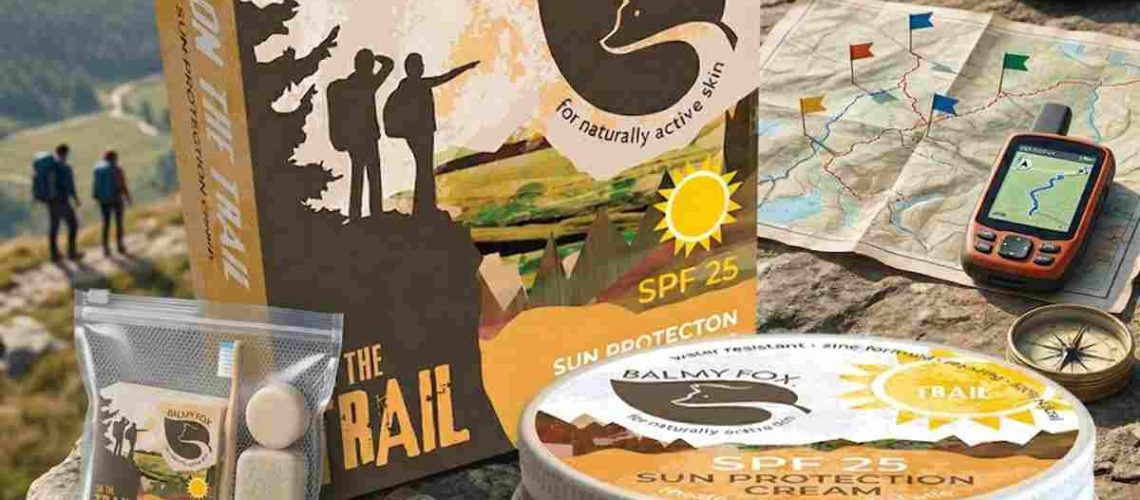
Balmy Fox makes natural skincare for holidays and outdoor days in Mid Wales. Everything comes in 60g screw-top aluminium tins rather than plastic — small enough for a coat pocket, sealed well enough for a suitcase, and recyclable indefinitely.
The everyday pair. A moisturiser for heated hotel rooms and air-conditioned trains, and a lip balm small enough to live in the pocket of whatever coat you are wearing. Trail Moisturising Cream Tin · Trail Lip Balm
The richer balm goes on before a clifftop walk and again in the evening after you have rinsed the salt off. The SPF lip balm handles wind and reflected light together. Water Hand and Foot Repair Balm · Water Sun Protection Lip Balm SPF 25
Broad-spectrum mineral sunscreen using non-nano zinc oxide, which reflects UV at the skin surface rather than absorbing it. Marine-safe, formulated without oxybenzone or octinoxate, and it does not sting when it mixes with sweat or sea spray — which is why it suits children and beaches. Water Resistant Sun Protection Cream SPF 25
A solid balm bar for hands, face and dry patches. It is not a liquid, so it does not go in the liquids bag at all, and there is nothing to leak in a suitcase. The simplest option if you are flying with hand luggage only. Water Balm Bar
Pack four things, use all four
Browse the Trail range for city breaks and countryside stays, or the Water range for coastal trips — plant-based, plastic-free, and small enough to forget you are carrying them.