Skincare in hand luggage is straightforward once you know how security sorts it. Creams, balms, gels, oils and sprays are treated as liquids, so each container must usually be 100ml or less and fit in one clear resealable bag. Solid bars are not liquids and can travel loose in your bag. Rules differ between airports and change over time, so check the current guidance for every airport on your route before you pack. A small screw-top tin and a solid balm bar cover most trips without any decanting.
You’re at the front of the security queue, laptop out, coat off, and the officer lifts a small metal tin out of your tray. Is it a liquid? Is it a solid? Neither of you is sure, and the queue behind you is getting longer. Three days later you’re in a pharmacy abroad, trying to read an ingredient list in a language you don’t speak, because the lip balm you meant to pack is still on the kitchen table.
Both moments are avoidable. Airport security follows a logic that’s easy to learn once someone explains it, and ingredient labels use the same naming system almost everywhere in the world. This guide is for anyone who flies with a rucksack or a cabin bag and wants their skincare to get through security first time, survive the journey, and cope with whatever climate is waiting at the other end. It covers how security classifies skincare, what goes in hand and checked luggage, how to pack for heat, cold, salt and altitude, how to read a label overseas, and a short packing list that works for most trips.
Airport security doesn’t care what a product is for. It cares about its physical state. Anything that pours, squeezes, spreads or sprays is treated as a liquid, and that includes a lot of things most people think of as solid.
UK government guidance on hand luggage lists creams, lotions, oils, pastes, gels and aerosols alongside drinks as liquids. That means a tin of balm, a tube of sun cream and a pot of moisturiser all count, even though none of them would spill if you turned them upside down. If you can press a finger into it and leave a dent, assume it’s a liquid for security purposes.
Solids are different. A bar you can hold without it changing shape, such as a bar of soap or a solid balm bar, isn’t a liquid and doesn’t need to go in the clear bag. A stick lip balm usually falls on the solid side too, although some airports ask for them in the bag anyway. When you’re unsure, put it in the bag. It costs nothing and saves a conversation.
The long-standing standard at many airports is that liquids must be in containers of 100ml or less, and all of them must fit in a single transparent resealable bag of around one litre, roughly 20cm by 20cm. Some airports have installed newer scanners that allow larger containers and let you leave liquids in your bag, but this isn’t universal, and the rules have changed more than once in recent years.
The catch is that you’re bound by the strictest airport on your route, including connections. A relaxed rule at your departure airport doesn’t help if your connecting airport still enforces 100ml. Check the official guidance for each airport before you travel. The UK government’s hand luggage restrictions page is the place to start for flights from the UK.
The limit applies to the size of the container, not how much is left in it. A 200ml tube with a small amount left inside is still a 200ml container and will usually be taken off you. This is where small tins earn their place. A 60g Balmy Fox tin sits comfortably inside the 100ml limit, so it can go straight into your liquids bag without decanting anything.
Keep your liquids bag in an outside pocket so it can come out quickly. Put tins, tubes and pots in it with their lids firmly closed. Screw-top aluminium tins seal well and won’t pop open if your bag is squashed in an overhead locker.
Solid bars can travel loose in your wash bag or a side pocket. Wrap a balm bar in a cloth or keep it in a small tin so it doesn’t pick up fluff, and keep it away from anything hot, such as a laptop charger, on long journeys.
Keep anything you’ll need during the flight within reach: lip balm, a hand cream and anything for dry skin. Cabin air is dry, and you’ll notice it on your lips and hands long before you land.
Larger containers can usually go in the hold, but the hold is cold and pressurised differently from the cabin. Pumps and flip-top lids are the ones that leak. Tape them shut or put each one in a sealed bag. Screw-top tins are far less likely to cause trouble.
Don’t put anything in the hold that you’ll need if your bag goes missing for a day or two. Sun cream is the obvious one if you’re flying somewhere hot.
The format of a product matters as much as what’s in it when you’re travelling. This table summarises how the common formats behave at security and in a bag.
| Format | Treated as a liquid? | Leak risk | Best for |
|---|---|---|---|
| Solid bar (balm bar, soap bar) | No | Very low | Hand-luggage-only trips, rucksacks, long journeys |
| Screw-top tin (balm, cream) | Yes, but small tins fit the limit | Low | Daily use, liquids bag, jacket pockets |
| Squeeze tube | Yes | Medium, especially if the cap flips open | Sun cream where a thinner texture helps |
| Pump bottle | Yes | High in the hold | Home use, not ideal for travel |
| Aerosol spray | Yes, and some types are restricted | Medium | Check the airline’s rules before packing |
| Stick lip balm | Usually no, but some airports ask | Low | Pocket use on the flight |
The pattern is clear. Solids are easiest at security, and small screw-top tins are the most reliable way to carry anything soft.
Your destination decides what your skin needs. Pack for the conditions you’ll meet, not the ones you’re leaving.
Heat and humidity mean sweat, and sweat plus moving fabric means friction. Think rucksack straps, waistbands and inner thighs on long walking days. An anti-chafe cream helps reduce friction on those spots. Sun cream matters even under cloud, and needs reapplying after swimming, towelling off or heavy sweating.
Dry heat pulls moisture from skin and lips quickly, and UV is often strong. Prioritise sun cream, an SPF lip balm and a moisturiser for the evening. Hands and heels crack fast in dry climates, especially if you’re in sandals.
Cold air holds little moisture and wind strips away what’s left on exposed skin. Cheeks, lips and the backs of hands take the worst of it. A richer balm on exposed skin before you go out helps protect it, and lip balm needs reapplying more often than you’d expect. Our guide to windburn protection covers this in more detail.
Salt water and sea wind dry skin out, and sun reflects off water. Rinse off after swimming where you can, reapply sun cream, and use a moisturiser in the evening. If you’re snorkelling or swimming near reefs, many people choose sun creams formulated without oxybenzone or octinoxate, and some destinations restrict sunscreens containing them. Check local rules before you go.
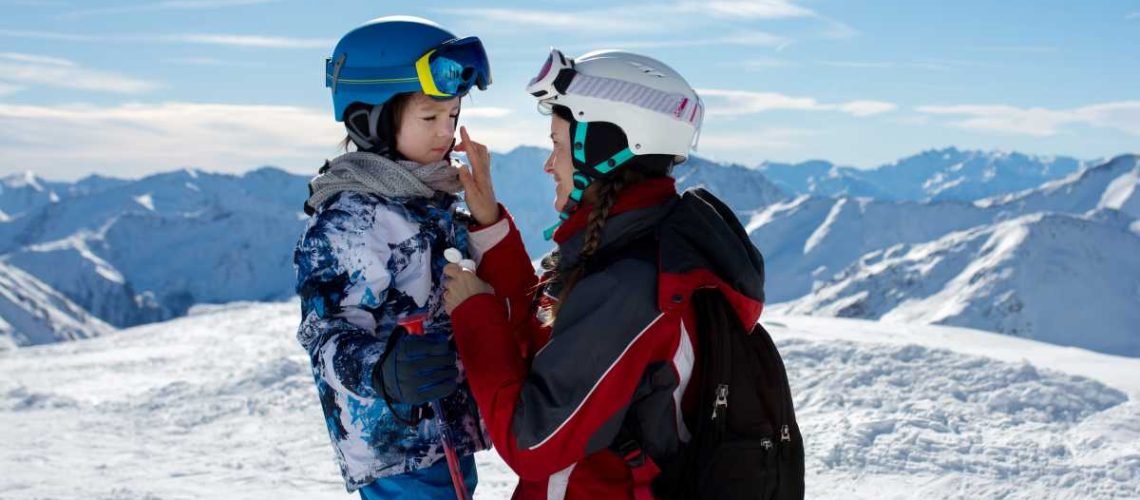
UV exposure increases with altitude, and snow reflects a large share of it back up at you. Mountain air is also cold and dry. Sun cream, SPF lip balm and a protective balm for cheeks and nose are the core kit. If you’re heading to the snow, our ski skincare packing list goes through it item by item.
Cabin air on long flights is often far drier than the air at home. Lips and hands feel it first. Keep lip balm and a hand cream in your seat pocket and use them little and often rather than waiting until skin feels tight.
Cities are easy to underestimate. You might walk 20,000 steps a day in new shoes, which is a recipe for sore feet. A foot cream in the evening and an anti-chafe cream for hot days on foot are worth the space. For short trips, our guide to weekend getaway skincare keeps the kit list short.
If you run out of something abroad, you’ll be reading labels in an unfamiliar language. The good news is that the ingredient list itself is usually written the same way everywhere.
Cosmetic ingredients are listed using the International Nomenclature of Cosmetic Ingredients, known as INCI. It’s used across the UK, the EU and many other countries. The marketing on the front of the pack will be in the local language, but the ingredient list on the back uses the same names you’d see at home, mostly based on Latin and chemical names.
A few examples you’ll recognise on a lot of outdoor skincare:
| INCI name | What it is |
|---|---|
| Butyrospermum Parkii Butter | Shea butter |
| Cera Alba | Beeswax |
| Lanolin | Wool wax from sheep’s wool |
| Theobroma Cacao Seed Butter | Cocoa butter |
| Zinc Oxide | Mineral UV filter used in sun creams |
| Parfum | Fragrance, which can be a blend of many ingredients |
Ingredients are listed in descending order of quantity, down to around 1%, after which they can appear in any order. The first five or so tell you what the product mostly is. If you know you react to a particular ingredient, learn its INCI name before you travel and save it on your phone.
In the UK and EU, certain fragrance allergens must be named on the label when they’re above set levels, even when they come from natural essential oils. You’ll see names like Limonene, Linalool and Citral at the end of ingredient lists. If you have sensitive skin, patch-test anything new on a small area before using it on your face, and don’t try a new product for the first time on the day of a big hike.
Travel isn’t the time for a ten-step routine. Three short moments a day cover most trips.
Wash with water or a gentle cleanser. Apply sun cream to exposed skin if you’re going to be outside, then lip balm with SPF. If it’s cold or windy, add a balm to cheeks and the backs of your hands.
Reapply sun cream after swimming, sweating heavily or towelling off, and at regular intervals in strong sun. Reapply lip balm often. Use anti-chafe cream before long walking or cycling days, on the places that rub.
Wash off sun cream, salt and sweat. Moisturise face and hands, and use a hand and foot cream on dry or cracked areas. Heels and knuckles benefit from a little extra before bed.
For most trips of up to two weeks, this list covers the essentials and fits in one small liquids bag, with the balm bar travelling outside it.
| Item | Why it’s there | Where it goes |
|---|---|---|
| Sun cream | UV protection at any destination with sun, snow or water | Liquids bag |
| SPF lip balm | Lips burn and dry out faster than most skin | Pocket or liquids bag |
| Solid balm bar | Multi-use moisturiser for hands, elbows and dry patches, no liquid allowance needed | Wash bag, loose |
| Hand and foot cream | Dry hands, cracked heels and tired feet | Liquids bag |
| Anti-chafe cream | Helps reduce friction on long walking, running or cycling days | Liquids bag |
| Small first-aid kit | Plasters, blister dressings and antiseptic wipes for cuts and blisters | Hand luggage |
Skincare products don’t replace first aid. A balm isn’t a blister dressing, and skin that’s broken, very red, hot or weeping needs proper first aid or a pharmacist’s advice rather than more cream.
If you’re going on a longer, self-supported trip, our thru-hiker skincare kit guide covers how to cut this down further.
Travel creates a lot of small plastic waste: miniature bottles, sachets and single-use tubes. A few habits cut it down without making the journey harder.
What you put on your skin ends up in the water you swim in and the showers you use. Rinse off sun cream before swimming in pools where you’re asked to, respect local rules on sunscreens in protected marine areas, and take empty packaging home if there’s no recycling where you’re staying. None of this needs to be complicated. It’s the same care you’d take on a hill at home.
Yes, as long as the tin is within the liquids limit at the airports you’re using. Balms count as liquids for security purposes, so a 60g tin goes in your clear liquids bag with your other creams and gels.
Yes. A solid balm bar that holds its shape isn’t a liquid, so it doesn’t need to go in the liquids bag. If an officer asks, it can be taken out and shown like a bar of soap.
Lip balm in a pot or tin counts as a liquid and goes in the liquids bag. Stick lip balms are usually treated as solids, but some airports ask for them in the bag, so it’s simplest to put them in anyway.
Yes, in a container of 100ml or less at airports applying the standard limit, inside your liquids bag. Larger bottles need to go in checked luggage unless your airports allow larger containers.
The standard is a single transparent resealable bag of about one litre, roughly 20cm by 20cm. Some UK airports with newer scanners have changed their rules, so check the airport’s own guidance before you fly.
It applies to the container. A larger container that’s nearly empty will usually still be refused, so carry products in containers that are 100ml or smaller.
Yes. Pressure and temperature changes in the hold can force pumps and flip-top lids open. Screw-top tins and solid bars are the least likely to leak, and sealing other containers in a bag protects your clothes.
Lip balm and a hand cream are the two most useful items in the cabin, because the air on long flights is dry. A moisturiser for your face is worth having in your liquids bag too.
In most countries, yes. Ingredient lists use INCI names, an international naming system based mainly on Latin and chemical names, so the list on the back of a pack reads the same in Spain, Japan or the UK.
Cera Alba is the INCI name for beeswax. It’s used in many balms to help them hold their shape and form a protective layer on the skin.
Many travellers choose mineral sun creams formulated without oxybenzone or octinoxate, and some destinations restrict sunscreens containing those ingredients. Check the local rules for where you’re going before you travel.
Wear well-fitting, moisture-wicking clothing and apply an anti-chafe cream to the areas that rub before you set off. Reapply during long days, and keep the skin clean and dry in the evening.
Usually, yes. Pharmacies and supermarkets sell sun cream and lip balm almost everywhere. Compare the ingredient list with a photo of your usual product if you have sensitive skin.
Everything in the Balmy Fox range is made for being outside, which means it’s also built to be carried. Each product comes in a screw-top aluminium tin or as a solid bar, so it packs flat, seals tight and doesn’t count for much in a liquids bag.
The Trail Balm Bar is the one to start with if you travel with hand luggage only. It’s a solid, so it travels outside the liquids bag, and it covers dry hands, elbows and wind-exposed skin in one bar.
For sun, the Water Resistant Sun Protection Cream SPF 25 is a mineral sun cream formulated without oxybenzone or octinoxate, and the Trail Sun Protection Lip Balm SPF 25 looks after your lips in the same conditions.
For long days on foot, the Trail Anti Chafe Cream helps reduce friction where straps and seams rub, and the Trail Hand and Foot Repair Cream moisturises dry hands and tired, cracked feet at the end of the day.
Planning a trip? Browse the full Balmy Fox range or the Trail kits and pack once for whatever the weather does when you land.