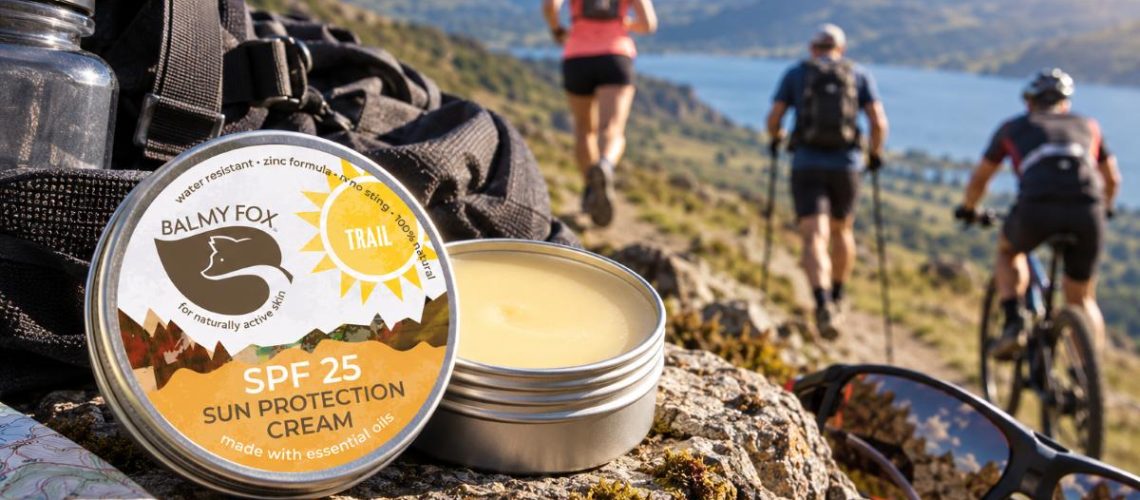
Three things separate a training session from an ordinary day outside. The first is sweat: sunscreen that would happily sit on dry skin all day gets physically washed and rubbed off by sweat within the first twenty to thirty minutes of steady effort, especially at hairlines, temples and the back of the neck. The second is duration — a two-hour long run or a weekend club ride covers a stretch of UV exposure most daily routines never come close to. The third is reflected UV: roads, pavements, and especially open water all bounce ultraviolet light back up at skin that a hat brim or sunglasses are protecting from direct sun overhead, but not from below.
None of this is exclusive to midsummer. UV index can be meaningfully high on a bright spring or early autumn day, well outside the weeks most people associate with sunscreen. Cloud cover reduces UV but doesn’t remove it — a good portion of ultraviolet light passes straight through cloud, which is why the classic sunburn-on-a-cloudy-day experience is a real, well-documented pattern rather than bad luck.
SPF is a measure of how much UVB radiation a sunscreen filters out when applied at the tested thickness, not a multiplier on how long you can safely stay in the sun. In practical terms, SPF25 filters a substantial majority of UVB rays reaching the skin when applied properly and at the right thickness — the exact percentage is a technical detail worth checking against current UK sun-safety guidance rather than relying on a single figure, since real-world protection depends heavily on how much is applied and how often.
UVB is only part of the picture. UK sunscreens also carry a separate UVA star rating on the packaging, alongside the SPF number, and it’s worth checking that rating on any product before you rely on it for long exposure — the SPF number alone doesn’t tell you about UVA protection. Reading both numbers on the tin takes a few seconds and is a habit worth building, whatever brand you use.
Sunscreens broadly split into two types: mineral formulations, which use ingredients like non-nano zinc oxide to reflect UV away from the skin, and chemical formulations, which absorb UV and convert it to heat. For active use, mineral sunscreen has a few practical advantages. It starts working as soon as it’s applied, with no 20-minute wait for the active ingredients to bind — useful when you’re trying to get out of the door on time. It also tends to sit more comfortably on skin that’s about to get hot and sweaty, and is less likely to sting eyes when sweat runs down your forehead mid-effort.
Non-nano zinc oxide is also the formulation of choice for sensitive skin and for children, since it sits on top of the skin rather than being absorbed, and it’s the option most commonly recommended where sting-free application near the eyes matters. Balmy Fox’s Sun Protection Cream range is formulated without oxybenzone or octinoxate — two ingredients that have drawn particular scrutiny over their effect on coral reef environments — which makes it a sensible default if a session includes open water at any point.
The honest answer for long sessions is that one application at the start line rarely lasts the whole way. Standard UK sun-safety guidance recommends reapplying every two hours, and immediately after any activity that would remove sunscreen mechanically — heavy sweating, swimming, or toweling off.
For runners and cyclists, that means planning reapplication the way you’d plan a gel or a water stop, not as an afterthought. A small screw-top tin in a running vest pocket or saddle bag makes this realistic; sunscreen you’ve left at home in a bathroom cabinet doesn’t help two hours into a long ride.
| Activity length | Reapplication guidance |
|---|---|
| Under 1 hour | One thorough application before you start is usually enough |
| 1–2 hours | Reapply once, at the midpoint or after a heavy sweat patch |
| 2+ hours (long run, sportive, hike) | Reapply roughly every two hours, and again after any swim or river crossing |
| Any duration in open water | Reapply immediately after getting out, since swimming removes sunscreen mechanically regardless of water-resistance claims |
The most common mistake isn’t skipping sunscreen altogether — it’s applying too little of it. UK guidance suggests roughly six teaspoons of sunscreen for full adult body coverage, which is considerably more than most people instinctively use. Under-applying doesn’t just reduce protection proportionally; it can undermine it far more than expected, since the tested SPF rating assumes a specific thickness of product.
The second common mistake is missing the edges: ears, the back of the neck, the parting line on the scalp, the tops of feet in sandals or low socks, and the backs of hands on a bike’s handlebars. These are exactly the spots that catch a sock-line or watch-strap sunburn pattern people often notice a day later.
The third is assuming yesterday’s application still counts. Sunscreen doesn’t persist meaningfully overnight, and a fresh application is needed for each session, regardless of how sunny the previous day was.
Sweat and sunscreen interact with the same friction points covered in Balmy Fox’s guide to wet-weather chafing — bra lines, waistbands, underarms — except here it’s heat and sweat doing the softening rather than rain. It’s worth applying anti-chafe cream to those specific spots separately from sunscreen, rather than relying on sunscreen to do both jobs. They’re solving different problems: one reduces UV exposure, the other reduces friction, and neither substitutes for the other.
Britain’s reputation for grey, wet weather is well earned for a lot of the year, but the bright, high-UV days that catch people out — a clear April morning, a crisp October afternoon on a ridge above the cloud line — turn up outside the obvious summer window too. Owning the weather, in the sun-protection sense, means keeping SPF as part of a kit bag routine whenever a session runs long, not just when the forecast says “heatwave”.
Yes. A significant amount of UV radiation passes through cloud cover, which is why sunburn on an overcast day is a genuine, common experience rather than bad luck. If a session runs an hour or more, sunscreen is worth applying regardless of how sunny it looks.
SPF measures how much UVB radiation a sunscreen filters when applied at the tested thickness. It doesn’t tell you about UVA protection on its own — check the separate UVA star rating on the packaging for that.
For active use, mineral sunscreen using zinc oxide has practical advantages: it works immediately with no wait time, tends to be gentler on skin that’s about to sweat heavily, and is less likely to sting eyes.
Standard UK guidance is every two hours, and immediately after anything that removes it mechanically — heavy sweating, swimming or toweling off — regardless of how the session started.
Yes. Sweat both dilutes sunscreen and physically wipes it away as it runs and gets rubbed off by clothing, which is why long, sweaty sessions need reapplication rather than a single morning application.
Balmy Fox’s Sun Protection Cream is formulated without oxybenzone or octinoxate, which is the standard consideration for open-water and reef environments. Reapply as soon as you’re out of the water, since swimming removes sunscreen mechanically.
Non-nano zinc oxide avoids the two ingredients — oxybenzone and octinoxate — most associated with coral reef damage, which is why it’s the commonly recommended mineral filter for swimming and snorkelling in reef environments.
More than most people think. UK guidance suggests roughly six teaspoons for full adult body coverage — under-applying reduces protection more than proportionally, since SPF ratings are tested at a specific thickness.
Non-nano zinc oxide is generally the recommended mineral filter for children’s skin, partly because it sits on the skin’s surface rather than being absorbed and is less likely to sting eyes. Always check current guidance and product labelling for age-specific advice.
Yes — check the period-after-opening symbol on the tin (a small open-jar icon with a number of months). Sunscreen past that date shouldn’t be relied on for its stated SPF.
UV is typically strongest from around 11am to 3pm in the UK. Scheduling long summer sessions either side of that window reduces exposure, though sunscreen is still worth applying for exposure outside those hours on bright days.
Sweating heavily can carry any sunscreen at the hairline down towards the eyes. Applying a slightly lighter layer at the hairline and temples, and letting it settle for a few minutes before setting off, reduces this.
SPF25 provides meaningful protection when applied generously and reapplied on schedule. For very long full-day exposure, following reapplication guidance matters more than the specific SPF number — a higher SPF applied once and never topped up protects less over a full day than a lower SPF reapplied properly.
Mineral sunscreens can leave more visible residue than chemical ones, particularly if over-applied. Working the cream in fully, in a thin even layer, reduces this while keeping the coverage the SPF rating relies on.
Pair the right product with the reapplication habits above — the product does the filtering, but the routine is what makes it hold up for the length of a session.
Built for sessions where sweat or water are a given — long runs, cycling, open-water swimming. Non-nano zinc oxide, formulated without oxybenzone or octinoxate. Reapply every two hours and immediately after swimming.
Lips burn as easily as any other exposed skin and are easy to forget mid-session. The 15g tin clips to a running vest, bum bag or bike bag for a quick reapplication at a water stop.
The same mineral zinc oxide approach in a fully plant-based formulation, for anyone avoiding animal-derived ingredients such as beeswax or lanolin in their kit bag.
Treat sunscreen as part of your kit bag for any session over an hour, in any season — not just a summer holiday item. Shop the Sun Protection range at balmyfox.co.uk, or check the current UK UV index before a long session on Met Office or Cancer Research UK’s SunSmart guidance.