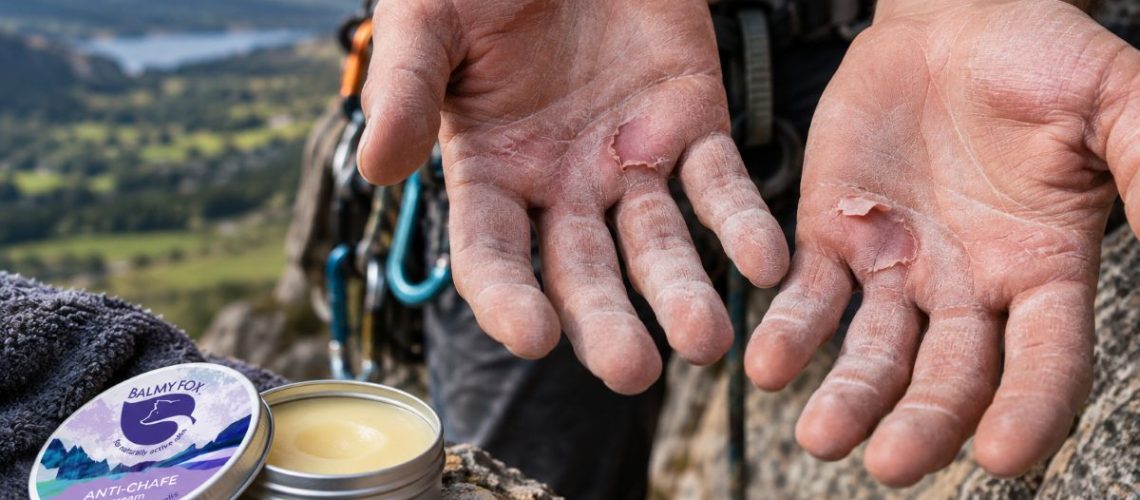
Chalk — magnesium carbonate — does its job by absorbing moisture and sweat from the skin surface, which is exactly what improves grip on rock. It’s also, by the same mechanism, drying skin out with every application. A long session might see chalk reapplied a dozen times or more, and each reapplication is another small withdrawal from the skin’s natural moisture.
Friction against rock adds a second layer of stress. Repeated contact on the same pads of skin — fingertips, the outer edge of the hand, the first knuckle crease — builds callus as a genuine protective response. That’s useful, up to a point. Beyond that point, thick, inflexible callus is more likely to catch on an edge and tear away in one piece, which is what produces a flapper.
Cold adds a third factor, particularly relevant through autumn, winter and any high-altitude or Slope-season climbing. Cold rock and cold air both accelerate moisture loss from skin, and cold fingers are less sensitive, so early cracking or splitting is easier to miss until you’re back in the warm and it starts to sting.
This is the rule that trips up a lot of people new to serious hand care for climbing: heavy moisturising right before you climb works against you. Grip depends on dry, slightly rough skin meeting rock with enough friction to hold. Oily or over-softened skin reduces that friction, which is the last thing you want on a technical move.
The practical answer is to separate the two jobs by time. Moisturise properly the evening before a climbing day, or on a rest day, giving skin time to absorb the product fully before it needs to grip anything. On the day itself, hands should be dry and chalked, not freshly creamed. Recovery happens after the session, once chalk and grip are no longer the priority.
A flapper is a specific kind of skin tear where a patch of built-up callus rips away from the layer underneath, usually across a knuckle or the pad below a finger, often without much warning beyond a sudden sharp sting. It happens when callus has thickened unevenly and stopped moving flexibly with the skin beneath it — a small crack or catch on an edge is enough to peel it.
Cracked knuckles and finger creases are a different problem: straightforward dryness. Repeated chalking without any restorative moisture in between leaves skin at the joints, which flexes constantly and has less natural oil to begin with, prone to splitting open at the crease. This gets noticeably worse in cold weather, when skin all over the body loses moisture faster.
| Problem | Typical cause | When to treat |
|---|---|---|
| Cracked knuckle creases | Repeated chalking with no restorative moisture between sessions, worse in cold weather | Evenings and rest days — moisturise, never right before climbing |
| Flappers (torn callus) | Uneven callus build-up catching and tearing on an edge or hold | Immediately after the tear for cleaning and protection; deep moisture once the area has settled |
| Dry, chalky, papery patches | Cumulative moisture loss from repeated chalk use over a session or season | End of session and rest days |
| Snagging or overly thick calluses | Callus allowed to build without any maintenance filing | Rest days only, after moisturising, with light filing rather than aggressive removal |
The routine that works for most regular climbers has three distinct moments, not one. The night before a climbing day, apply a proper repair balm generously and let it absorb overnight — this is when deep moisture does the most good with zero cost to grip the next day. On the morning of a session, skip moisturiser entirely; dry, chalked skin is what you want on the rock.
After climbing, once hands are done for the day, wash off chalk and apply a repair balm again, focusing on knuckles, finger creases and any areas that feel tight or papery. This is also the point to properly inspect for any small cracks or early flappers before they get worse on the next session.
Callus is protective, not a problem to eliminate. Climbers who file or sand their calluses down aggressively often find they need to rebuild that protection quickly, and in the meantime have less resistance to friction, not more. The better approach is light maintenance: a fine file or pumice, used gently on rest days after moisturising (when skin is softer and easier to work with), just enough to smooth an edge that’s starting to catch or snag, rather than removing the callus altogether.
The goal is callus that flexes with the skin beneath it rather than sitting as a separate, rigid layer waiting to tear. Regular light maintenance achieves that far more reliably than occasional aggressive filing.
Climbing doesn’t stop when the temperature drops, and cold-weather cragging, mountaineering, and any time spent on snow or ice brings the Slope range’s usual conditions — cold, wind, low humidity — to a activity that’s already hard on hands. Cold rock draws heat and moisture from fingertips fast, and cold, numbed fingers are worse at signalling early damage, so climbers often don’t notice a crack forming until they’re back in a warm van or hut.
A mountain doesn’t check the calendar before it gets cold, which is the whole idea behind owning the weather rather than working around it — kit and skincare routines built for the conditions you’ll actually meet on a winter route, not just the summer ones.
It’s best avoided. Grip depends on dry, slightly rough skin meeting the rock, and freshly moisturised or oily skin reduces friction. Moisturise the night before or on a rest day instead, and keep the day of climbing dry and chalked.
A flapper is a patch of built-up callus tearing away from the skin underneath, usually where callus has thickened unevenly. Clean the area, trim any loose skin edge that’s likely to snag further, protect it while it settles, and once it’s no longer sore, treat the surrounding skin with a repair balm on a rest day.
Yes. Chalk works by absorbing moisture from the skin surface to improve grip, and repeated reapplication over a session gradually dries skin out, which is why evening and rest-day moisture is important.
Light maintenance filing on rest days, after moisturising, helps smooth edges that are starting to snag. Aggressive filing or removing callus entirely tends to leave hands less protected, not more, since callus is a genuine protective response to friction.
The evening before a climbing day, or on rest days — giving the product time to absorb fully before hands need to grip anything. Avoid moisturising on the morning of a session.
Yes, in the opposite way to over-moisturised skin. Deep cracks and flappers are painful contact points that can make you favour certain grips or lose confidence on a hold, quite apart from the discomfort itself.
Clean the area if you can, trim any loose skin that’s likely to catch further, and tape it if you need to keep climbing. Proper repair with a moisturising balm is a rest-day job, once chalk and grip aren’t a factor.
Yes. Cold rock and cold air both speed up moisture loss from skin, and cold, less sensitive fingers make it easier to miss early cracking until you’re warmed up again and it starts to sting.
It’s better avoided between routes in the same session, for the same grip reason as pre-climb moisturising. Save it for the end of the day or a rest day.
It forms a basic barrier but sits heavily on the skin and can feel greasy for longer than a purpose-formulated balm, which matters if you’re climbing again the same day or the next morning.
Consistent evening moisturising through the colder months, rather than only reaching for a balm once skin has already split, is the most reliable prevention — cracking is much easier to prevent than to heal quickly once it’s happened.
It can be more drying for those with already sensitive or eczema-prone skin. Rinsing chalk off promptly after a session rather than leaving it on for hours, and keeping up rest-day moisturising, both help.
It depends on depth and location, but a deep flapper on a key contact point often needs at least a day to settle enough to tape and climb on comfortably. Pushing through a raw, unprotected tear risks making it worse and slower to heal.
Very oily or heavily occlusive formulations applied close to a climbing session, since they leave a slicker surface. Save richer, oil-based repair balms for evenings and rest days when grip isn’t a factor.
The timing matters more than the product here — apply these away from a climbing session, not right before one.
A deeper, richer formulation suited to evening or rest-day use, when there’s time for it to absorb fully before hands need to grip anything again. Apply generously to knuckles, finger creases and any cracked or chalky patches.
A solid format that survives a chalk bag or crag pack without leaking, useful for multi-day trips where a screw-top tin feels like one thing too many to carry. Best kept for the evening at the hut, van or campsite rather than mid-session.
A lighter, fully plant-based option for rest-day maintenance, for climbers avoiding beeswax or lanolin — same evening-only timing rule applies.
Build hand care into your rest days the same way you’d plan a training cycle — consistent, not just reached for once skin has already cracked. Shop the Slope range at balmyfox.co.uk for hands that hold up over a season, not just one good day at the crag.